AI Agent Security Incidents: A Control-Failure Framework for CISOs
There is no single verified public incident from the past seven days that can be responsibly summarized without a primary source. What can be assessed with confidence are the recurring control gaps, including excessive permissions, absent runtime enforcement, and weak audit logging, that consistently underlie agentic AI failures reported over the past year. CISOs evaluating new agent deployments should test their controls against these known failure modes rather than waiting for a specific incident to prompt action.
Why This Analysis Does Not Name a Specific Incident
A responsible analysis of AI agent security incidents depends on primary sources: vendor postmortems, CERT advisories, or verified breach disclosures. At the time of this analysis, no such documentation was available for the requested seven-day window. Rather than speculate about events that cannot be verified, this article focuses on the control failures that industry reporting has consistently identified across agentic AI deployments over the past year. These patterns are stable enough that CISOs can use them to evaluate their own environment regardless of which specific incident prompted the review.
Recurring Failure Modes in Agentic AI Deployments
Four control failures appear repeatedly across documented agentic AI security events. They are not novel exploits. They are structural mismatches between how agent systems operate and how organizations govern them.
| Failure Mode | What It Means in Practice |
|---|---|
| Excessive Permissions | Agents provisioned with broader access than their task requires, often inherited from service account templates designed for static applications rather than autonomous systems. |
| No Runtime Enforcement | Policy checks applied only at configuration time, with no in-line evaluation of agent actions as they execute. Once deployed, the agent operates outside any active control boundary. |
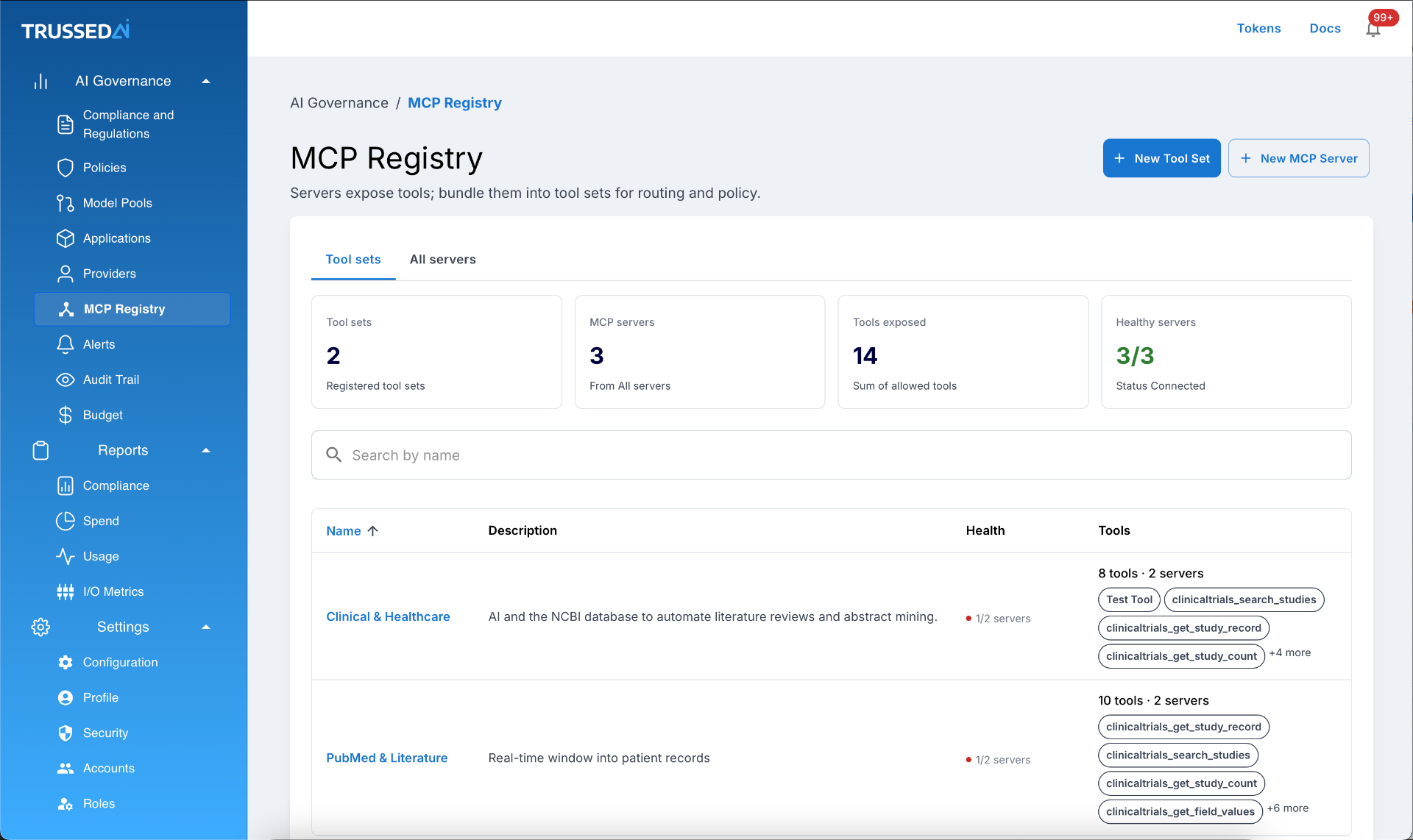
| Weak Audit Trails | Logs that record agent invocation but not the specific tool calls, parameters, or downstream effects of each action, leaving investigators unable to reconstruct what actually happened. |
| Missing Interrupt Mechanisms | No reliable mechanism to interrupt an agent session mid-execution once anomalous behavior is detected, so failures propagate until the task completes or times out. |
The Common Thread: Configuration-Time Controls Applied to Runtime Systems
Most agentic AI security failures share a structural cause rather than a novel exploit. Organizations often carry over access control models designed for static applications, where permissions are reviewed once at deployment and rarely revisited. AI agents behave differently. They select tools, chain actions, and make decisions during execution that were not explicitly authorized in advance.
When the only enforcement point is a one-time configuration review, there is no mechanism to catch an agent that drifts into unintended tool use, escalates its own privileges through chained calls, or interacts with systems outside its original scope. The gap is not a missing feature so much as a mismatch between when the organization checks behavior and when behavior actually occurs.
Key principle
Runtime enforcement means evaluating each agent action against current policy at the moment of execution, not trusting that a deployment-time review will hold for every action the agent later takes.
Permissions: The Difference Between Granted and Enforced
Least-privilege access is widely recommended for AI agents, but recommendation and enforcement are not the same thing. An agent can be granted narrow permissions on paper while still operating with broader effective access because the underlying API, service account, or credential it uses was provisioned for a different, more permissive purpose.
Without a runtime layer that evaluates each action against a current policy rather than a static grant, permission scope creep is difficult to detect until after an incident. CISOs should ask whether their environment enforces permission boundaries at the moment of action, not only at the moment of setup.
Controls That Interrupt Failure Progression Before Impact
The most effective control investments reduce the window between when an agent begins behaving anomalously and when that behavior causes measurable harm. That window is closed by three complementary controls working together:
- In-line policy evaluation: Each tool call or external action is evaluated against an active policy before it executes, not after.
- Session interruption: A reliable mechanism exists to stop an agent mid-session when evaluation flags an anomaly, and the interruption can be triggered automatically or by an operator.
- Rollback or containment: Where technically feasible, in-flight actions that have already executed can be reversed or their effects contained before they propagate further.
Organizations that lack any of these three controls are relying on post-incident response rather than incident prevention, which significantly increases both the scope of a failure and the cost of recovery.
Auditability Is Often the First Control to Fail
When an agentic AI incident is investigated, the first question is usually what the agent actually did, in what order, and with what parameters. Many organizations discover at this point that their logging captures agent invocation events but not the granular tool calls or decision points that would explain how an outcome occurred.
This gap does not cause an incident on its own, but it extends detection and remediation time significantly. Teams must reconstruct behavior from secondary system logs rather than a direct record. Independent, tamper-evident audit logging of agent actions is a governance control that pays off primarily during investigation, and its absence is rarely noticed until an incident forces the question.
Multi-Agent Environments Compound These Gaps
As organizations move from single agents to systems where multiple agents delegate tasks to one another, permission propagation becomes harder to track. An agent that calls another agent may pass along its own access scope implicitly, without a clear record of what was delegated or why.
Without a policy layer that governs agent-to-agent interactions specifically, permission boundaries that were reasonable for one agent can be inherited by a second agent operating in a different context. This is a structural risk in any environment adopting multi-agent architectures, independent of any specific incident.
Evaluation Criteria for CISOs Assessing Vendor Claims
When a vendor claims to prevent agentic AI security failures, the claim should be testable against the control gaps above rather than accepted on description alone. The following questions produce concrete, auditable answers rather than marketing language:
- How does permission enforcement operate during execution, not just at setup? Can you demonstrate it with a live test case?
- What does the audit log actually record at the tool-call level? Is each log entry tamper-evident and independently stored?
- What happens operationally when an agent is interrupted mid-session? Can in-flight actions be rolled back or contained?
- How does the vendor's model handle permission scope when one agent delegates work to another? Is delegation logged and bounded?
Practical test
A vendor unable to answer these questions with live demonstrations rather than documentation is describing a policy document, not a runtime control. Treat any answer that defers to a future roadmap item as a current gap.
Frequently Asked Questions
Do these failure modes apply to SaaS-hosted agents as well as self-hosted ones?
Yes. Permission scope, runtime enforcement, and audit logging are relevant whether the agent runtime is hosted by a vendor or operated internally. The practical difference is that with SaaS-hosted agents, some of these controls are held by the vendor rather than the customer, which makes vendor evaluation more important. Organizations should request evidence of each control from SaaS vendors rather than assuming the vendor's default configuration is sufficient for enterprise risk requirements.
Is the absence of a kill switch a common gap in current platforms?
It is more common than expected. Many agent platforms provide a way to terminate an agent task from an administrative console, but fewer provide automated interruption triggered by a policy evaluation signal during execution. The distinction matters: operator-initiated termination requires a human to notice anomalous behavior before acting, while automated interruption can respond within the same execution window in which the anomaly occurs. Asking vendors to demonstrate automated interruption specifically is a more meaningful test than confirming that manual termination exists.
How should logging requirements be scoped when evaluating agent vendors?
At minimum, audit logs for agent systems should capture: the initiating request, each tool call with its full parameter set, the response from each tool, any agent-to-agent delegation events including what access scope was passed, and a timestamp with a consistent clock source for each entry. Logs should be written to a store the agent itself cannot modify, and retention periods should match the organization's existing incident response requirements. Logging that captures only invocation and completion events is insufficient for forensic reconstruction of how an outcome occurred.
Where does AI agent governance fit within an existing security program?
Most of the controls relevant to AI agents have direct parallels in existing security domains: least-privilege access management, runtime application self-protection, API gateway policy enforcement, and audit log management are all established disciplines. The primary adjustment is extending these disciplines to cover the specific behaviors of agent systems, including chained tool use, session-level decision-making, and agent-to-agent delegation. Organizations with mature controls in these areas are better positioned to extend them than those starting from a greenfield governance posture.
Assess Your Agent Controls Against Known Failure Modes
Before approving expanded AI agent deployments, evaluate whether your current controls address permission enforcement, runtime monitoring, and audit logging at the level of individual agent actions.
Learn About AI Agent Security