Technical Guide

    AI Agent Shared Responsibility

    In enterprise agent deployments, providers typically own security inside their model and platform boundary, while the deploying organization retains accountability for identity, permissions, tool authorization, data access, policy enforcement, monitoring, and incident response. Unclear ownership of those enterprise controls is what most often produces harmful actions and audit gaps.

    In enterprise agent deployments, providers typically own security inside their model and platform boundary, while the deploying organization retains accountability for identity, permissions, tool authorization, data access, policy enforcement, monitoring, and incident response. Unclear ownership of those enterprise controls is what most often produces harmful actions and audit gaps.

    Responsibility surfaces in agent stacks

    Separate ownership explicitly so no layer becomes an assumed handoff with no named owner.

    Model and platform

    Hosting, service boundary controls, and vendor-enabled safety filters.

    Identity and access

    Non-human identities, scoped credentials, and least-privilege tool rights.

    Tools and data

    API bindings, retrieval corpora, secrets, and downstream side effects.

    Policy and operations

    Action allowlists, monitoring ownership, and incident response.

    Control ownership by architectural layer
    Layer Typical provider ownership Enterprise ownership
    Model and platform Model hosting, built-in safety filters, platform control-plane security inside the service boundary Model selection, system instructions, acceptable use, residual risk acceptance
    Identity and access Identity federation features exposed by the platform Non-human identity design, credential scope, rotation, revocation, least privilege
    Tools and data API security of vendor-managed tools and connectors they operate Tool bindings, retrieval corpora, secrets, data scopes, downstream side effects
    Policy and operations Native logs and controls inside the vendor surface Central policy, monitoring integration, audit retention, incident response

    Why shared responsibility is different for AI agents

    Classic cloud shared responsibility models still apply: providers secure the managed infrastructure and platform services they operate, and customers remain responsible for identity, access configuration, data classification and usage, and how services are used. AI agents expand that model because they do not only generate content. They plan, call tools, read enterprise data, and trigger side effects such as messages, tickets, code changes, or payments.

    That means ownership is no longer limited to a model endpoint or a SaaS control plane. Responsibilities span foundation models, orchestration runtimes, tool and function interfaces, memory and retrieval stores, identity federation, and enterprise policy engines. Each layer has different control points. Model safety filters address a different risk than orchestrator allowlists, API gateways, data-layer permissions, or SIEM and SOAR response paths.

    NIST AI risk management guidance places accountability on the organization for governing, mapping, measuring, and managing AI risk across the lifecycle, including third-party and deployed system contexts. Regulators and public-sector guidance increasingly reinforce the same point: deploying organizations keep responsibility for risk management, proportionate human oversight, and outcomes even when components are vendor-supplied.

    How responsibilities divide across the agent stack

    Model and platform vendors typically document ownership of model hosting, built-in safety filters they enable, and platform control-plane security inside their service boundary. Customers remain responsible for prompts and system instructions, tool bindings, retrieval corpora, network egress, and downstream enforcement. Tool and integration owners may secure their own APIs, but they do not decide which enterprise credentials an agent may hold or which business actions are permitted in context.

    Enterprise-retained responsibilities are therefore the ones that determine real-world impact. The organization decides who the agent is as a non-human identity, which tools it may invoke, which data scopes it can read or write, which actions require human approval, what telemetry is retained, and how operators respond when behavior is wrong or noncompliant. OWASP LLM guidance underscores why those choices matter: excessive agency, insecure output handling, and sensitive information disclosure are tightly tied to the tools and functions agents may invoke and how outputs are consumed. Those controls are largely configured by the deployer.

    A practical allocation looks like this. Providers own defects and protections inside the services they operate. Enterprises own configuration, composition, and operational use. Neither side can cover the full risk alone. Vendor guardrails reduce some classes of unsafe generation. They do not replace enterprise identity governance, tool mediation, data permissions, or incident ownership.

    Control gaps created by unclear ownership

    The most common failure is not missing model documentation. It is unclear ownership of tool authorization, agent action auditability, and operational response. When an agent can act with broad credentials because no team owns least-privilege tool design, excessive agency becomes a configuration outcome rather than a model flaw. When logging ownership is split across vendors without an enterprise-defined end-to-end trail, teams cannot reconstruct which identity, agent instance, tool call, and data scope produced a harmful or noncompliant action.

    Another frequent gap appears between platform guardrails and enterprise policy. Built-in model filters are not a substitute for centralized policy that blocks high-risk actions uniformly across multiple model backends. If policy lives only inside one vendor surface, switching models or adding tools silently bypasses controls. The same pattern appears in monitoring: if prompt, plan, tool-call, and downstream-effect telemetry are not integrated into existing SOC workflows with named on-call ownership, detection arrives after business impact.

    Agent deployments also introduce ownership surfaces beyond classic SaaS. Tool and API credentials, retrieval indexes, policy-as-code for agent actions, human approval gates, and continuous evaluation of agent behavior all need named accountable owners. Without that map, security, platform, application, and data teams each assume another group is watching the boundary.

    Implementation decisions that keep ownership enforceable

    • Build a RACI across the full agent inventory: Inventory agent-capable apps, models, tools, and data stores. Assign accountable owners for permissions, monitoring, logging retention, and incident response before production use.
    • Mediate tools instead of granting broad credentials: Prefer allowlisted actions, parameter validation, rate limits, just-in-time elevation, and human-in-the-loop gates for high-impact side effects over direct agent possession of powerful long-lived secrets.
    • Design end-to-end audit trails: Link user or service principal, agent session, plan and tool calls, data accessed, and downstream effect. Define who can retain and export those records for investigations.
    • Centralize enterprise policy across backends: Express prohibited actions and sensitive data handling in enterprise-controlled policy rather than relying only on each model provider’s built-in guardrails.
    • Integrate agent telemetry into existing operations: Feed redacted prompts where needed, tool invocations, decisions, and policy denials into SOC and response processes with clear ownership and fail-closed defaults when policy or monitoring paths are unavailable.
    • Test ownership, not only jailbreaks: Validate control effectiveness with scenarios for over-scoping, tool misuse, approval bypass, and cross-environment data leakage in addition to model abuse tests.

    Governance, contracts, and residual accountability

    Enterprises retain accountability for acceptable-use policy, residual risk acceptance, and the outcomes of agent actions in their environment. That accountability does not transfer because a model, orchestrator, or connector is vendor-managed. Align agent oversight with existing AI governance, identity governance, and third-party risk processes rather than creating one-off exceptions for every pilot.

    Vendor contracts and data processing terms should state security control ownership, logging availability and retention export, breach notification, and change management for model or tool behavior. Buyer diligence should ask which controls the model provider, agent platform, and each tool vendor explicitly own versus only expose for customer configuration. It should also ask how non-human identities are issued, scoped, rotated, and revoked; whether immutable logs exist for tool invocations and data access; whether enterprise policy can block high-risk actions across model backends; and what joint incident response looks like when harm involves a vendor-managed component.

    Document human oversight by use-case risk level and ensure operators can disable or constrain agents quickly. There is still no single universal RACI standard for multi-vendor AI agents. Organizations must compose cloud shared-responsibility language, AI risk management frameworks, and product-specific documentation into an internal control model. Provider specificity on tool-use logging and guarantees varies by product and region, and regulatory expectations continue to evolve. The durable approach is to keep enterprise ownership of identity, authorization, data, policy, monitoring, and response explicit, testable, and operationally staffed.

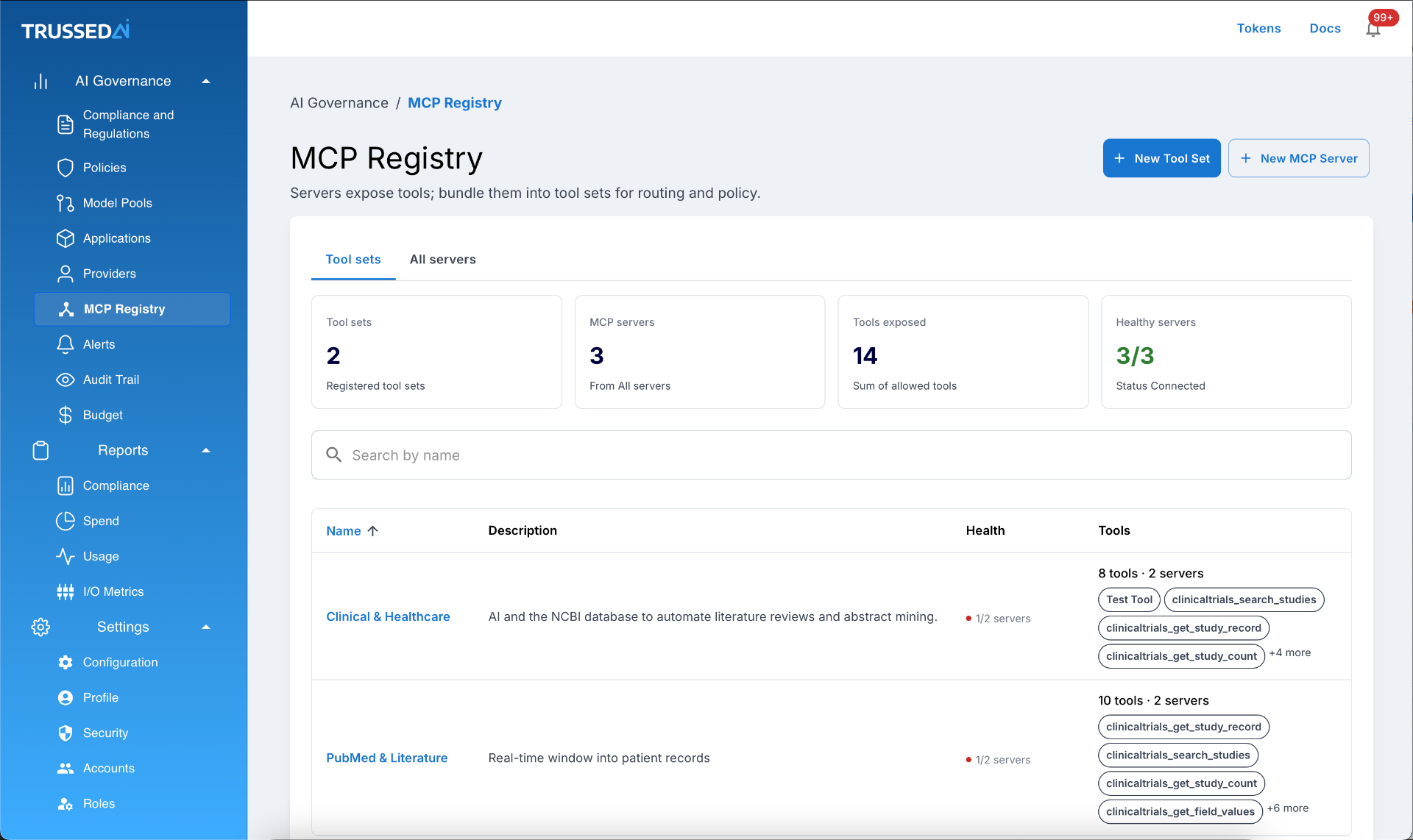
    Runtime governance platforms can help enforce policy, permissions, monitoring, and auditability at the point of agent action. They do not replace the enterprise’s duty to define ownership and accept residual risk. Useful evaluation criteria remain architectural: clear control boundaries, least-privilege tool access, recoverable audit trails, and operational authority to stop or constrain agents when conditions change.

    Ownership checklist before production

    Use this list to confirm enterprise controls have named owners before agents can act on real systems.

    • Agent inventory includes apps, models, tools, retrieval stores, and accountable owners for each control boundary.
    • Non-human identities are scoped, rotatable, and revocable; tools are mediated rather than granted broad long-lived secrets.
    • End-to-end audit trails link identity, agent session, tool calls, data access, and downstream effects.
    • Enterprise policy blocks high-risk actions consistently across model backends, with fail-closed defaults when policy paths are unavailable.
    • Agent telemetry feeds existing SOC and response workflows with named on-call ownership and tested disable or constrain paths.

    Clarify ownership before agents act

    If you are defining AI agent security roles across model, platform, identity, and tool boundaries, review how runtime policy, permissions, and audit controls map to your enterprise accountability model.

    Learn About AI Agent Security