Current Developments

    AI Governance for Genetic Data: Lessons from 23andMe

    23andMe’s 2025 bankruptcy put large-scale consumer genetic data under court-supervised transition and renewed concern about stewardship, transfer, secondary use, and deletion rights when ownership changes. Enterprises that let AI systems retrieve, tool-call, or process genetic data face the same class of risk if agent identity, purpose limitation, retention, and audit controls are weak.

    Effective AI governance for genetic data requires least-privilege runtime enforcement, governed tool access, immutable access records, and vendor criteria that still hold through acquisition, insolvency, or subprocessor change.

    Governance pressure points for genetic data in AI systems

    Corporate and vendor change is a foreseeable control event. Four pressure points define where AI programs most often lose enforceability over genetic data.

    • Stewardship riskOwnership change can alter controllers, processors, and deletion commitments.
    • Agent expansionRAG, APIs, and tool calls multiply identities that can touch genomic data.
    • Runtime controlsPolicy checks must gate retrieval, tool use, export, and retention outcomes.
    • Audit evidenceImmutable logs must reconstruct who accessed what, why, and with which tool.

    What the 23andMe bankruptcy context changed about data stewardship risk

    In 2025, 23andMe filed for Chapter 11 bankruptcy protection, placing its consumer genetic database inside a court-supervised asset sale and transition process. That development mattered less as a single-company event and more as a stress test of assumptions enterprises often make about highly sensitive personal data: that the original collector remains the durable steward, that access pathways stay stable, and that deletion or purpose limits remain enforceable after control shifts.

    Regulators and privacy advocates raised a practical concern during the proceedings: genetic data could be treated as a transferable asset. If that framing prevails, downstream parties may inherit large volumes of persistent, familial, and re-identifiable information under different commercial incentives, altered processor chains, or weakened continuity of privacy commitments. Bankruptcy and acquisition contexts can change data controllers, processors, subprocessors, and contractual terms unless continuity, access revocation, and deletion obligations are explicit and technically enforceable.

    Genetic and ancestry data held by direct-to-consumer testing firms is widely recognized as highly sensitive because it does not rotate like a password, can implicate biological relatives, and can support re-identification even when directly identifying fields are limited. Earlier account-level security incidents at 23andMe also showed that credential stuffing and weak authentication can expose genetic-related profile data at scale. Those history points matter for enterprise AI programs because they demonstrate that sensitivity, blast radius, and long-lived residual risk are structural, not situational.

    Corporate change is a foreseeable event, not an edge case. Controls that live only in policy documents are insufficient when automation multiplies access paths.

    For AI governance leaders, the relevant lesson is narrow and operational. Any environment in which genetic data can be retrieved by agents, copied into embeddings, passed through tools, or shared with model providers must assume that legal entity, vendor ownership, and subprocessor relationships can change. Controls that exist only in policy documents or primary-application entitlements are insufficient when automation multiplies access paths faster than contracts can be renegotiated.

    AI-specific access paths that expand genetic data exposure

    Enterprise AI systems do not merely read the same records a legacy application already exposes. Agents and connected tools create additional transient access routes. Genetic data can be reached through vector stores, lakehouse queries, EHR or genomics APIs, workflow automations, and third-party model endpoints. Each route introduces a new identity, a new trust boundary, and often a new retention surface in prompts, embeddings, logs, evaluation sets, or vendor telemetry.

    Retrieval-augmented generation is a common expansion path. If genomic corpora, reports, or linked clinical metadata are indexed into general-purpose enterprise search or RAG layers, the original application’s authorization model is no longer the only gate. An agent with broad retrieval rights can pull sensitive attributes into a context window for a purpose the source system never intended. Tool calling creates a second expansion path: an agent may invoke query tools, export functions, ticketing systems, or external processors with higher effective privilege than the human initiator holds in day-to-day workflows.

    API connectors and downstream model providers add further concentration risk. Even when primary storage remains inside a controlled environment, prompts or intermediate artifacts may leave that boundary. In high-sensitivity domains, the governance question is not only whether the model “trained on” genetic data. Inference-time exposure, temporary caching, debug logging, and subprocessors that receive content for safety, monitoring, or support can all create durable copies outside the originating control plane.

    These paths matter during organizational change because they are easy to overlook in asset inventories. A bankruptcy, divestiture, or vendor acquisition may focus on core databases and customer contracts while AI indexes, agent service accounts, integration tokens, and evaluation corpora continue to hold residual genetic attributes. Without an accurate map of every system that can receive, transform, or retain those attributes, deletion, access revocation, and purpose limitation become incomplete.

    Access path How exposure expands Primary control focus
    RAG / vector indexes Bypasses source-app authorization; sensitive attributes enter shared retrieval corpora Corpus isolation, purpose-aware retrieval gates
    Tool calling Agents may gain higher effective privilege than the human initiator Allow-listed tools, scoped tokens, approvals
    Model / API connectors Prompts, caches, logs, and telemetry can leave the control plane Minimization, boundary enforcement, vendor limits
    Residual AI artifacts Embeddings, eval sets, and tokens retain data after ownership change Inventory, revocation, deletion propagation

    Runtime control architecture for genetic data and AI agents

    Governing AI access to genetic data requires separating the control plane from the data plane. Identity, policy decisioning, approvals, and audit collection should sit in front of genomic stores and analytical tools rather than relying on model prompts or application-layer conventions alone. Genetic datasets should carry sensitivity and purpose metadata that retrieval gateways and tool-calling intermediaries can evaluate before any read, transform, or export occurs.

    Least privilege should be enforced with agent-specific identities, not reused human credentials. Mediated service accounts, short-lived credentials, just-in-time elevation, and scoped tokens reduce standing access to genomic resources. Runtime policy engines can combine actor identity, declared purpose, data classification, environment, and tool risk into an allow, deny, or approve decision before a retrieval or function call executes. Allow-listed tools and parameterized queries are preferable to open-ended database or shell-style agency over genetic corpora.

    High-sensitivity corpora should be isolated from general-purpose enterprise RAG indexes. Output filtering and data-minimization layers can prevent raw sequence content or strongly re-identifying attributes from leaving the trust boundary when a narrower result satisfies the task. Bulk export, fine-tuning preparation, cross-border transfer, and similar high-risk actions should require human-in-the-loop approval with a recorded business purpose.

    Auditability is architectural

    Immutable, append-only event records should capture identity, policy decision, data resource, tool invocation, approval reference, and retention outcome. Cryptographic logging strengthens non-repudiation when investigators must reconstruct AI-mediated access after an incident, vendor transition, or regulatory inquiry. Deletion and retention workflows must propagate across primary stores, backups, embeddings, logs, and known subprocessors, or the control system will overstate its effectiveness.

    Controls to implement before agents touch genetic data

    Use these operational controls to keep purpose limitation, access revocation, and evidence trails enforceable when ownership or subprocessors change.

    Treat ownership change as a control trigger

    Re-baseline lawful basis, consent scope, transfer assessments, and vendor DPIAs whenever controllers, processors, or subprocessors change.

    Assign owners outside the product team

    Make named roles accountable for agent identities, policy exceptions, and audit-log integrity independent of feature delivery pressure.

    Align policies to purpose limitation

    Express access rules in terms of permitted purposes and minimization, not only role names, especially where genetic or biometric regimes apply.

    Bind vendors before scale

    Contract for subprocessor control, deletion and return, audit support, and prohibition on unapproved training or secondary use of genetic attributes.

    Retain evidence long enough to investigate

    Keep audit records for the longer of regulatory, contractual, or internal investigation windows so historical AI access can still be reconstructed.

    Prefer narrow agency over broad autonomy

    Reduce tool scope, separate sensitive corpora, and default to mediated queries so an agent failure does not become a genomic data event.

    Vendor and platform evaluation criteria for high-sensitivity genetic data

    When AI systems can reach genetic attributes, vendor and platform selection should test whether controls survive acquisition, insolvency, and subprocessor change, not only day-one security questionnaires.

    • Agent identities are distinct from human credentials, with least-privilege scopes and short-lived access to sensitive corpora.
    • Runtime policy enforcement can allow, deny, or require approval based on purpose, data classification, tool risk, and environment.
    • High-sensitivity genetic data is isolated from general-purpose RAG indexes and open-ended query tools.
    • Tool access is allow-listed, mediated, and auditable; bulk export and fine-tuning preparation require recorded human approval.
    • Contracts bind subprocessor change notification, deletion and return, audit support, and bans on unapproved secondary use or training.
    • Immutable access logs capture identity, decision, resource, tool, approval reference, and retention outcome for investigation windows.
    • Deletion and revocation propagate across primary stores, backups, embeddings, logs, evaluation sets, and known subprocessors.
    • Ownership, controller, or processor change is treated as a formal control trigger with re-baselined assessments and access reviews.

    Assess runtime controls before genetic data meets AI agents

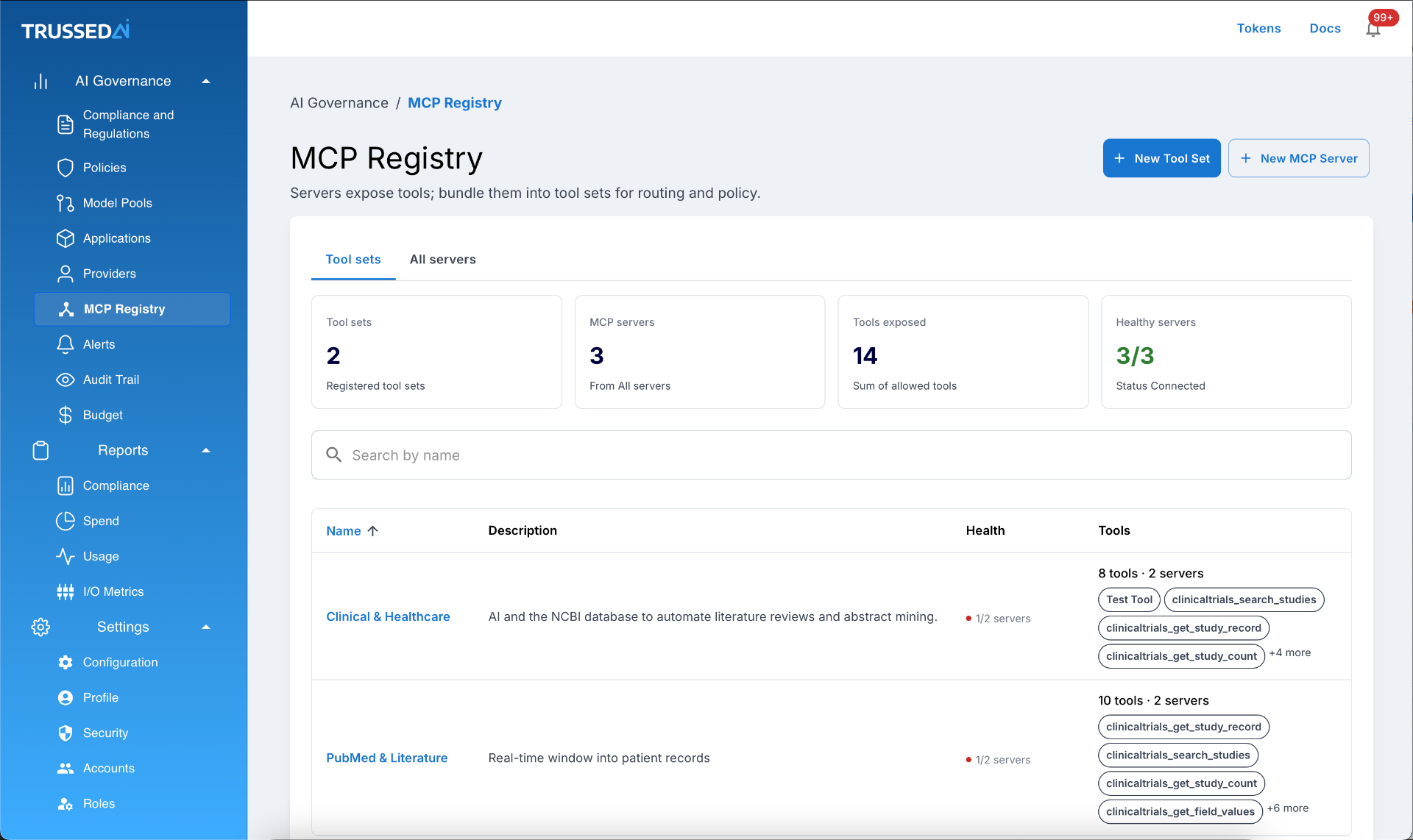
    Trussed AI focuses on runtime governance and security for enterprise AI agents, including policy enforcement, agent permissions, tool approval workflows, and audit logging. Use those control layers to evaluate whether high-sensitivity data access remains enforceable through operational and corporate change.

    Explore Runtime Governance