See how Trussed maps to your regulation in minutes

    No generic demo, just the controls relevant to your program.

    Book a session
    Best Practices Guide

    The Role of the Chief Privacy Officer in University AI Governance

    A practical guide for university privacy leaders governing AI systems and AI agents across decentralized campus environments, with emphasis on agent permissions, auditability, and runtime policy enforcement.

    Why university AI governance needs a privacy operating owner

    University AI governance is not a single approval step. It is an operating model that must work across decentralized campus environments, where academic units, administrative offices, research groups, vendors, and technical teams may all introduce AI systems or AI agents that interact with institutional data.

    The Chief Privacy Officer is well positioned to define the privacy requirements for that operating model. The role is not to centralize every AI decision. The role is to set boundaries for data use, ensure those boundaries are translated into enforceable controls, and make sure the institution can demonstrate how sensitive data was accessed, used, restricted, or protected.

    CPO responsibilities in AI governance

    Data use boundaries

    Define approved purposes, consent-sensitive use, minimization, retention, and provider controls for institutional data used by AI.

    Runtime enforcement

    Ensure policies apply when agents retrieve records, call tools, generate outputs, or trigger workflow actions.

    Cross-campus operating model

    Coordinate privacy governance with security, IT, legal, research, procurement, academic units, and data stewards.

    Core responsibilities for the CPO

    • Set the AI privacy risk framework: Define which AI use cases require privacy review, what data categories are sensitive, which uses require consent or special approval, and what controls are mandatory before deployment.
    • Approve privacy requirements for vendors and tools: Distinguish consumer AI tools from enterprise-controlled deployments. Review contractual controls for data retention, training use, logging, subprocessors, administrative oversight, and authorized use.
    • Define agent access and purpose limits: Require least-privilege rules that bind the human user, agent identity, data source, approved purpose, allowed tool, and action scope.
    • Mandate auditability and investigation readiness: Ensure AI activity can be reviewed through logs showing user identity, agent identity, accessed data, tool calls, policy decisions, outputs, approvals, denials, and overrides where feasible.
    • Own privacy incident and exception processes: Coordinate response procedures for unauthorized retrieval, sensitive output leakage, excessive agent permissions, prompt injection effects, and policy exceptions.
    • Require periodic reassessment: Reassess AI use when tools, data sources, prompts, retrieval indexes, integrations, or institutional purposes change.

    Where privacy controls must operate in AI agents

    Traditional privacy review often occurs before procurement or system launch. That is necessary, but insufficient for AI agents. Agent behavior can vary by prompt, user role, retrieved context, available tools, and the action the agent is attempting to perform. Privacy controls therefore need to operate at runtime as well as during design and approval.

    Runtime policy enforcement

    A privacy-aware AI agent architecture should place a policy enforcement layer between agents and university systems of record. This layer evaluates whether a given user and agent may retrieve a specific category of data, invoke a specific tool, or produce a specific output for the stated or inferred purpose. It should apply before data retrieval, before tool execution, and before output delivery when sensitive data is involved.

    Identity and permissions

    Identity is central. Agent permissions should not be treated as a broad service account that bypasses normal institutional controls. The agent should operate with permissions tied to the authenticated user, role, affiliation, data classification, approved purpose, and action scope. For example, an advising assistant may be permitted to summarize information relevant to a student support interaction, but not export bulk records, modify academic status, or send communications without human approval.

    Logging and investigation readiness

    Logging also changes. For AI privacy risk management, logs should capture more than application events. They should preserve enough context to support investigations: prompts, retrieved data references, tool calls, policy decisions, outputs, administrative changes, overrides, and human approvals, subject to retention and access controls. Because logs themselves may contain sensitive information, the CPO should define what is logged, who can access it, how long it is retained, and how masking or redaction is applied.

    Privacy control points for AI agents

    The CPO’s requirements should be translated into concrete control points across the agent lifecycle. The following view organizes the supplied governance responsibilities into operational checkpoints.

    Control point Privacy question Operational evidence
    Before procurement or deployment Which AI use cases require privacy review, and which data categories are sensitive? Risk framework, review requirements, contractual controls, authorized use terms, and provider obligations.
    Before data retrieval May this authenticated user and agent access this category of data for this purpose? User identity, agent identity, role, affiliation, data classification, purpose, and policy decision.
    Before tool execution Is the agent allowed to invoke this tool and perform this action scope? Tool call record, approved action scope, approval requirement, denial, override, or human approval.
    Before output delivery Can the agent produce this output without exposing sensitive data or exceeding the approved purpose? Output record, policy decision, masking or redaction approach where applicable, and delivery context.
    After changes or incidents Do prompts, retrieval indexes, integrations, tools, or institutional purposes require reassessment? Periodic review record, exception process, incident response activity, administrative changes, and retained logs.

    An implementation sequence for decentralized campuses

    For decentralized campuses, implementation should connect central privacy policy to local AI activity without forcing every unit into the same operational workflow. A practical sequence starts with a shared risk framework, then moves into vendor and tool review, role-based agent permissions, runtime enforcement, audit logging, incident handling, and periodic reassessment.

    1. Define the privacy risk framework: Identify the AI use cases, data categories, consent-sensitive uses, and approval thresholds that require review.
    2. Translate privacy requirements into procurement and deployment controls: Review data retention, training use, logging, subprocessors, administrative oversight, and authorized use.
    3. Bind agent permissions to context: Tie the human user, agent identity, data source, approved purpose, allowed tool, and action scope together.
    4. Apply controls at runtime: Evaluate retrieval, tool invocation, workflow action, and output delivery when sensitive data is involved.
    5. Maintain audit evidence: Preserve logs for prompts, retrieved data references, tool calls, policy decisions, outputs, approvals, denials, overrides, and administrative changes, subject to privacy requirements for the logs themselves.
    6. Reassess as systems change: Repeat review when tools, data sources, prompts, retrieval indexes, integrations, or institutional purposes change.

    Evaluation criteria for AI governance and security platforms

    When evaluating governance and security platforms for university AI use, privacy leaders should focus on whether the platform can support policy translation, runtime enforcement, and investigation-ready evidence.

    • Support for privacy requirements across procurement, deployment, runtime access, agent permissions, logging, incident response, and periodic review.
    • Ability to distinguish consumer AI tools from enterprise-controlled deployments.
    • Controls for data retention, training use, logging, subprocessors, administrative oversight, and authorized use.
    • Least-privilege rules that bind human user, agent identity, data source, approved purpose, allowed tool, and action scope.
    • Runtime policy enforcement before data retrieval, before tool execution, and before output delivery when sensitive data is involved.
    • Audit logs that preserve prompts, retrieved data references, tool calls, policy decisions, outputs, administrative changes, overrides, and human approvals where feasible.
    • Retention, access control, masking, and redaction policies for logs that may contain sensitive information.
    • Exception and incident processes for unauthorized retrieval, sensitive output leakage, excessive agent permissions, prompt injection effects, and policy exceptions.

    How Trussed AI fits into the operating model

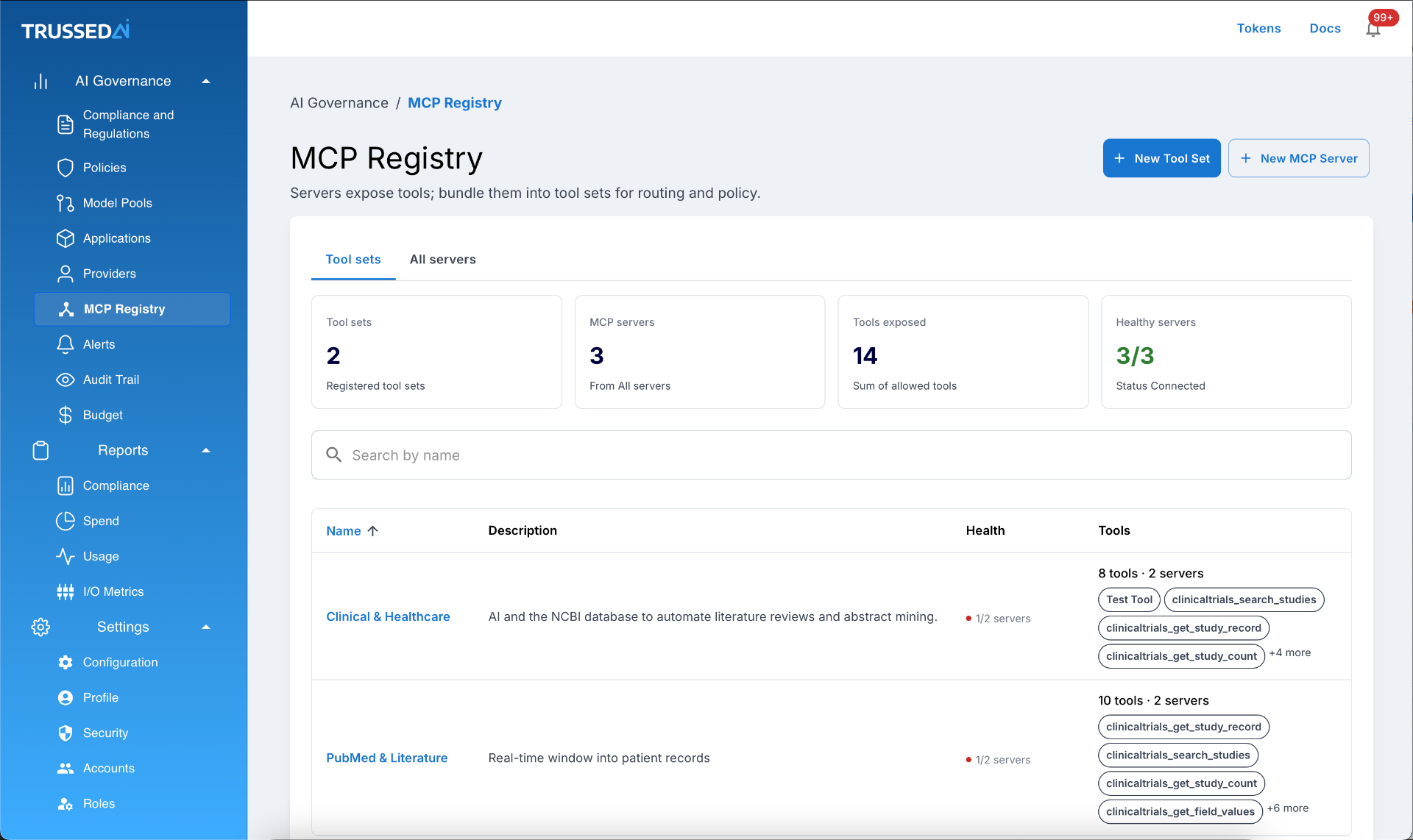
    For institutions evaluating Trussed AI in this operating model, the key question is how privacy policies are translated into runtime governance for AI agents that connect to sensitive data, systems of record, and workflow tools. The evaluation should focus on whether agent permissions are constrained, whether policy decisions occur when agents retrieve data or invoke tools, and whether audit evidence can support review and investigation.

    Practical takeaway

    If a university connects AI agents to institutional systems, privacy governance cannot stop at policy documentation or vendor review. The CPO’s requirements need to operate where the agent acts: retrieval, tool use, workflow execution, output delivery, logging, exceptions, and reassessment.

    Build privacy controls into university AI execution

    If your institution is connecting AI agents to sensitive data, systems of record, or workflow tools, evaluate how privacy policies are enforced at runtime, how agent permissions are constrained, and how audit evidence is retained.

    Request a Demo