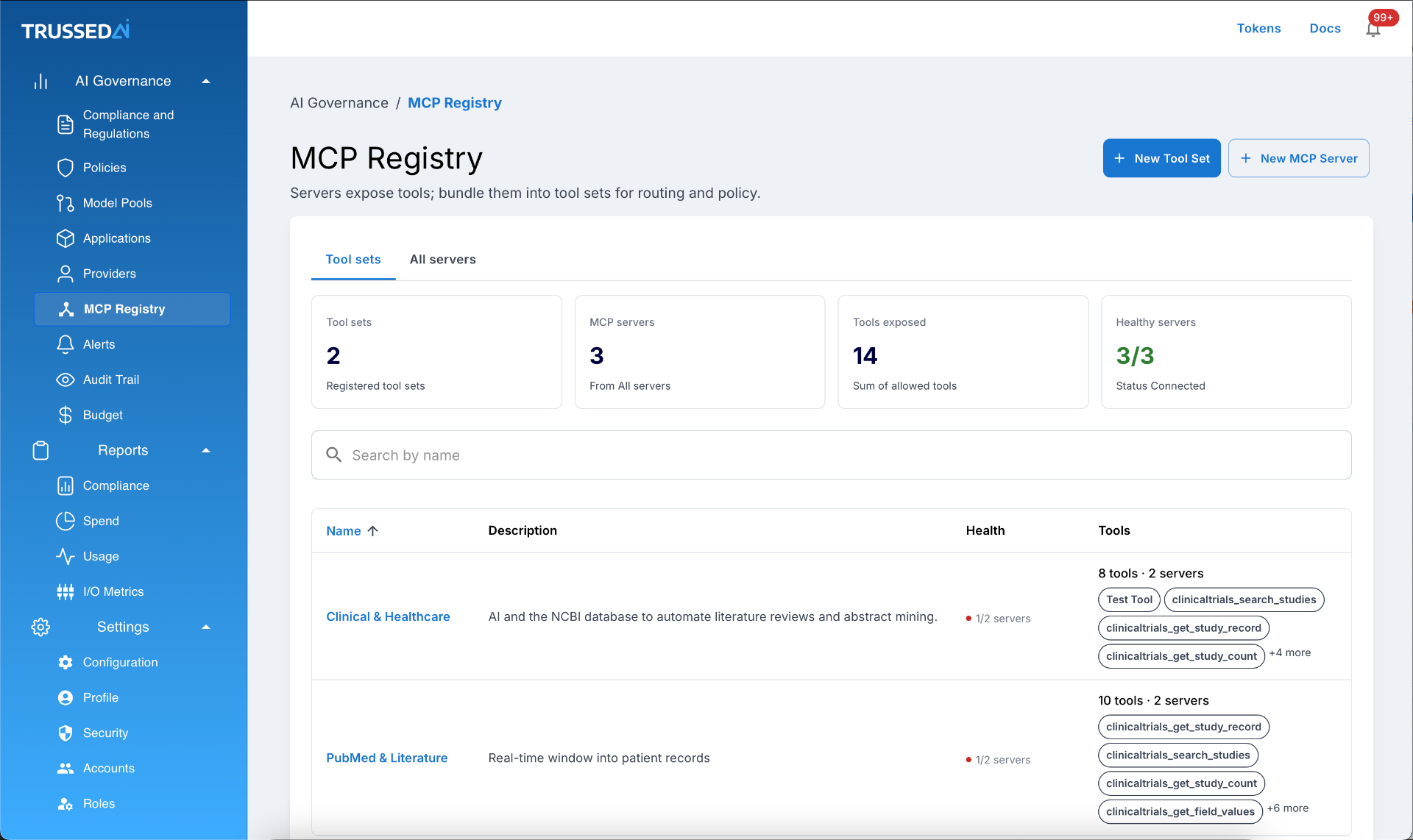
See how Trussed maps to your regulation in minutes

    No generic demo, just the controls relevant to your program.

    Book a session
    Implementation Guide

    Health System AI Intake Process: How to Triage AI Requests From Clinicians

    A practical framework for collecting, classifying, reviewing, and approving clinician AI tool and agent requests before pilot or deployment.

    Enterprise AI governance resource

    Direct answer

    A clinician AI request intake process is a formal workflow for collecting, classifying, reviewing, and approving AI tools or agents requested by clinicians before they are piloted or deployed. In a health system, the process should capture intended use, clinical decision impact, PHI access, patient-facing status, vendor or model information, EHR and system integrations, and whether the tool updates over time. Requests should then be triaged by risk tier and routed to clinical informatics, security, compliance, legal, IT, and executive governance as needed.

    Approval should not be treated as the end of governance. If the tool receives PHI, system access, tool permissions, or agent capabilities, the intake record should carry forward into runtime access controls, monitoring, and audit logging.

    Why health systems need a formal AI intake path

    Clinicians are increasingly identifying AI tools, copilots, and agents that could support documentation, triage, communication, administrative work, research workflows, or patient care operations. Without a formal intake path, those requests can arrive through informal channels, individual departments, vendor relationships, innovation programs, or unsanctioned experimentation.

    A formal intake process gives the health system a consistent way to evaluate AI requests before they become pilots or production systems. It helps governance teams understand what the tool is intended to do, who will use it, whether it will touch PHI, whether it will affect clinical decisions, and whether it will connect to the EHR or other operational systems.

    The goal is not to slow all requests down. The goal is to quickly separate low-risk exploration from requests that require privacy, security, clinical, legal, IT, or executive review.

    Required intake information for clinician-submitted AI requests

    The intake form should collect enough information to classify the request without forcing every submitter to complete a full procurement or technical assessment on day one. A practical intake should include:

    • Use case and users: Clinical problem, department, user roles, workflow location, and expected operational benefit.
    • Clinical impact: Whether output is documentation-only, advisory, diagnostic, treatment-related, or patient-facing.
    • Data sources: PHI access, EHR data, notes, images, messages, claims, device data, or de-identified data.
    • Integration scope: EHR integration, APIs, messaging systems, identity systems, clinical tools, or agent actions.
    • Model and vendor details: Model provenance, hosting model, validation materials, update behavior, and available transparency documentation.
    • Deployment expectation: Exploration, limited pilot, production use, patient interaction, or enterprise-wide availability.

    Design principle

    The intake process should be specific enough to expose risk, but simple enough that clinicians use it before experimenting outside the approved governance path.

    Risk-tier criteria for clinician AI requests

    Health systems should classify AI requests by the type of clinical impact, data exposure, integration depth, and operational control involved. A risk tier does not need to be final at submission. It can be provisional during initial screening and updated during review.

    Triage dimension Lower-risk indicators Higher-risk indicators
    Clinical impact Documentation support, administrative assistance, or internal summarization that does not determine diagnosis or treatment. Diagnostic, treatment-related, patient-facing, or action-taking use that could influence patient care.
    Data exposure No PHI, de-identified data, or limited internal data with defined handling requirements. Access to PHI, notes, images, messages, device data, claims, or sensitive clinical records.
    System access No operational integration, or use in a sandboxed environment without production system access. EHR integration, APIs, messaging tools, identity systems, clinical tools, or agent tool access.
    Operational control Static tool behavior with limited users and clear human review. Vendor updates, adaptive behavior, autonomous actions, tool calls, or agent capabilities that require continuing oversight.

    Stakeholder routing and approval ownership

    A health system AI request triage workflow should separate initial classification from full approval. This prevents every request from going through the same heavy process while still ensuring that high-risk requests are escalated. The workflow should also define service-level expectations. If the process is opaque or too slow, clinicians and departments may return to informal procurement or unsanctioned experimentation.

    A common model is to use a central intake queue managed by an AI governance or clinical informatics function. That team performs an initial screen, assigns a provisional risk tier, and routes the request to required reviewers.

    Initial screen and provisional tier

    The central intake queue reviews the submitted use case, users, data sources, integration scope, and deployment expectation. The team assigns a provisional risk tier and identifies which reviewers are required.

    Required review routing

    Security and privacy should review any PHI-connected request. Clinical informatics should review workflow fit and clinician accountability. Compliance or legal should review regulatory triggers, data use terms, and vendor obligations. IT should review integration feasibility, identity, logging, supportability, and operational ownership.

    Escalation for high-risk use

    High-risk requests should be escalated to a clinical AI governance committee or equivalent executive forum before any patient-care pilot. This is especially important when the tool is patient-facing, influences diagnosis or treatment, acts without human confirmation, or connects to systems that can change the clinical record or trigger downstream actions.

    When intake should trigger runtime governance

    Initial approval is a point-in-time control. It determines whether a requested AI tool or agent can proceed to pilot or deployment under defined conditions. Runtime governance addresses what happens after the tool is active: who can use it, what data it can access, what tools it can call, what actions it can take, and how usage is logged and monitored.

    Runtime controls become especially relevant when a tool or agent has access to PHI, connects to EHR or workflow systems, supports multiple user roles, calls external tools, or performs actions beyond generating text. In those cases, governance teams should not approve the request in abstract. They should approve a bounded operating model: permitted users, permitted data classes, allowed tools, disallowed actions, audit logging requirements, and monitoring expectations.

    For AI agents, the intake process should be explicit about identity and permissions. An agent that can retrieve patient information, draft messages, call APIs, or coordinate with other agents should not inherit broad user privileges by default. Least privilege, tool approval workflows, agent identity, and audit logging are core design considerations. The same applies to MCP-connected tools or other agent tool interfaces. The health system should know which tools are approved, which permissions are granted, and which actions require human confirmation.

    Trussed AI provides runtime governance and security capabilities for enterprise AI agents, including runtime policy enforcement, runtime monitoring, agent identity, agent permissions, least privilege, AI tool governance, MCP security, and audit logging. In a health system intake model, these capabilities become relevant after a request is approved for controlled pilot or deployment, particularly when agent behavior, system access, or PHI exposure must be governed continuously.

    Implementation checklist for AI governance leaders

    Use the intake process to establish a review record that can carry forward into pilot controls, deployment approval, and runtime oversight.

    • Capture the intended use, clinical workflow, user roles, and expected operational benefit.
    • Identify whether the AI tool is documentation-only, advisory, diagnostic, treatment-related, or patient-facing.
    • Document PHI access, EHR data access, clinical notes, images, messages, claims, device data, and de-identified data use.
    • Record EHR integration, API access, messaging systems, identity systems, clinical tools, and agent actions.
    • Collect model provenance, hosting model, validation materials, update behavior, and available transparency documentation.
    • Classify whether the request is exploration, limited pilot, production use, patient interaction, or enterprise-wide availability.
    • Route PHI-connected requests to security and privacy review.
    • Route workflow and clinician accountability questions to clinical informatics.
    • Route regulatory triggers, data use terms, and vendor obligations to compliance or legal review.
    • Route integration feasibility, identity, logging, supportability, and operational ownership to IT review.
    • Escalate high-risk patient-care pilots to the clinical AI governance committee or equivalent executive forum.
    • Carry approved scope into runtime access controls, monitoring, permissions, tool governance, and audit logging.

    Frequently asked questions

    What is a clinician AI request intake process?

    It is a formal workflow for collecting, classifying, reviewing, and approving AI tools or agents requested by clinicians before they are piloted or deployed.

    What should the intake process capture?

    It should capture intended use, clinical decision impact, PHI access, patient-facing status, vendor or model information, EHR and system integrations, and whether the tool updates over time.

    Who should review clinician AI requests?

    Requests should be triaged by risk tier and routed to clinical informatics, security, compliance, legal, IT, and executive governance as needed.

    Why should approval carry forward into runtime governance?

    Approval defines whether a tool can proceed under specific conditions. Runtime governance helps ensure the active tool or agent stays within those approved conditions by governing data access, tool permissions, system actions, monitoring, and audit logging.

    Govern approved AI agents at runtime

    A structured intake process helps health systems decide which AI requests can proceed. Runtime governance helps enforce the approved scope once agents, tools, data access, and permissions are active.

    Explore Runtime Governance