What Happens When You Miss the EU AI Act Deadline: Enforcement, Fines, and Lost Market Access
Missing an EU AI Act compliance deadline exposes an organization to enforcement by national market surveillance authorities or the EU AI Office, tiered fines of up to 35 million euros or 7% of global turnover, and corrective-action orders that can restrict, suspend, or withdraw an AI system's access to the EU market. The specific consequence depends on which deadline was missed, the risk classification of the system, and whether the violation involves prohibited practices, high-risk obligations, or general-purpose AI model requirements.
Enforcement at a Glance
The EU AI Act creates a layered enforcement structure tied to a phased compliance timeline. Understanding which authority can act, when, and with what powers is essential before assessing any specific missed deadline.
| Dimension | Key Facts |
|---|---|
| Phased Deadlines | Obligations apply in stages from February 2025 through August 2027, based on system risk classification. |
| Fine Tiers | Penalties range from 7.5 million euros / 1% to 35 million euros / 7% of global turnover, whichever is higher. |
| Dual Enforcement | National market surveillance authorities handle general obligations; the EU AI Office and Commission handle general-purpose AI models. |
| Market Access Powers | Authorities can order corrective action, restrict placement, or withdraw non-compliant systems under Regulation 2019/1020. |
The Phased Compliance Timeline
The EU AI Act does not create a single universal compliance date. Instead, obligations are phased in over roughly two and a half years from the regulation's entry into force, with the most urgent requirements applying earliest to the highest-risk categories.
Prohibited AI practices became enforceable in February 2025, which represents the first hard deadline. High-risk AI system obligations in sectors such as healthcare, critical infrastructure, education, and employment become applicable on a separate schedule. General-purpose AI model obligations, including transparency and systemic-risk requirements, have their own phase-in period. Organizations operating across multiple risk categories may therefore face several distinct compliance windows, each with different documentation, conformity assessment, and registration requirements.
Determining which deadline applies to a given AI system requires correctly classifying the system under the Act's risk tiers, identifying whether it was placed on the market or put into service before or after the relevant effective date, and confirming whether any transitional provisions apply to that category.
Who Enforces the EU AI Act, and With What Authority
Enforcement is split across two distinct layers, each with its own jurisdiction and powers.
National Market Surveillance Authorities
Member States designate national market surveillance authorities that operate under powers granted by Regulation (EU) 2019/1020, the general EU product market surveillance framework the AI Act incorporates by reference. These authorities can request technical documentation, order corrective action, and, where non-compliance is confirmed, restrict or withdraw an AI system from the market.
The EU AI Office and European Commission
For general-purpose AI (GPAI) models, enforcement authority sits with the European Commission through the EU AI Office. Article 101 gives the Commission direct power to fine GPAI providers for violations of Chapter V obligations, independent of national-level action.
Parallel Compliance Obligations
An organization deploying or integrating a GPAI model may face two separate compliance tracks: one handled through the national authority with jurisdiction over EU-facing deployments, and a separate track at the EU level for the underlying model. Governance teams should identify both authorities and map their obligations accordingly.
EU AI Act Fine Tiers Under Articles 99 and 101
The Act establishes three tiers of administrative fines, each calibrated to the severity of the violation. In all cases, the applicable fine is whichever amount is higher: the fixed euro ceiling or the stated percentage of the offender's total worldwide annual turnover for the preceding financial year.
| Violation Category | Maximum Fine | Typical Triggers |
|---|---|---|
| Prohibited Practices | 35 million euros or 7% of global turnover | Deploying AI systems banned under Article 5, such as certain biometric categorization or social scoring systems |
| High-Risk Obligation Failures | 15 million euros or 3% of global turnover | Missing conformity assessment, inadequate technical documentation, absent human oversight mechanisms, registration failures |
| Incorrect or Misleading Information | 7.5 million euros or 1% of global turnover | Supplying incorrect information to notified bodies or national authorities during conformity assessment or investigation |
For SMEs and start-ups, national authorities are directed to consider the organization's size and economic situation when setting fine amounts within these ceilings. However, the ceiling thresholds themselves are not reduced for smaller organizations.
GPAI model fines under Article 101 follow a separate structure. Providers of GPAI models with systemic risk who fail to comply with Chapter V obligations, including model evaluation, adversarial testing, and incident reporting requirements, can be fined up to 15 million euros or 3% of global turnover. Provision of incorrect or misleading information to the Commission in this context carries a cap of 7.5 million euros or 1%.
How Market Access Is Restricted, Suspended, or Withdrawn
Fines are not the only consequence of non-compliance, and in practice they are rarely the first one. Market access restriction typically precedes financial penalty, following a structured escalation path.
Corrective Action Orders
Lawful placement of a high-risk AI system on the EU market depends on CE marking and completion of the conformity assessment process described in Articles 43 and 47 through 49. A system that has not completed conformity assessment, or that a market surveillance authority determines no longer meets its documented requirements, can be subject to a corrective-action order before any fine is issued.
Restriction and Withdrawal
Under the Regulation 2019/1020 framework the AI Act relies on, national authorities can require the provider or deployer to bring the system into compliance within a set period, restrict its availability while remediation is underway, or order a full withdrawal or recall if corrective action fails or the risk is deemed serious.
EU-Wide Market Restriction
Escalation to EU-wide market restriction is a further step beyond national action, reserved for cases where a non-compliant system poses risk across multiple Member States. For most organizations, the immediate exposure is the national corrective-action process rather than an EU-wide ban, but that process can still halt deployment, procurement, or continued operation of the affected system while remediation is documented and verified.
Evidence Authorities Expect During an Investigation
The fine tiers and market access powers described above are legal consequences, but they are triggered by an inability to produce specific technical evidence on request. The following categories of documentation are those enforcement authorities are most likely to request.
- Article 12 logging records: Evidence that the AI system maintains appropriate logs of its operation, sufficient to assess whether it has functioned within its intended purpose.
- Article 11 technical documentation: Comprehensive documentation of the system's design, development process, risk management procedures, and intended purpose, prepared before market placement.
- Article 14 human oversight measures: Demonstration that effective human oversight mechanisms are built into the system, allowing operators to understand, monitor, and intervene in AI outputs.
- Conformity assessment records: Documentation showing the completed conformity assessment procedure, including any involvement of notified bodies, and the basis for CE marking.
- EU declaration of conformity: The signed declaration confirming the system meets all applicable requirements under the Act.
- Risk management system outputs: Records showing ongoing identification, analysis, and mitigation of risks throughout the system lifecycle.
Practical Implication for Agentic Systems
For organizations deploying autonomous or agentic AI systems, this creates a practical requirement: runtime behavior needs to be logged, agent actions need to be traceable to a defined permission scope, and human oversight boundaries need to be demonstrable rather than asserted.
Connecting Enforcement Exposure to Technical Governance
Article 12 logging, Article 11 technical documentation, and Article 14 human oversight are not abstract governance principles. They are records an authority can ask an organization to produce within an investigation timeframe. The gap between an organization's legal obligations and its technical readiness to demonstrate compliance is where enforcement exposure materializes.
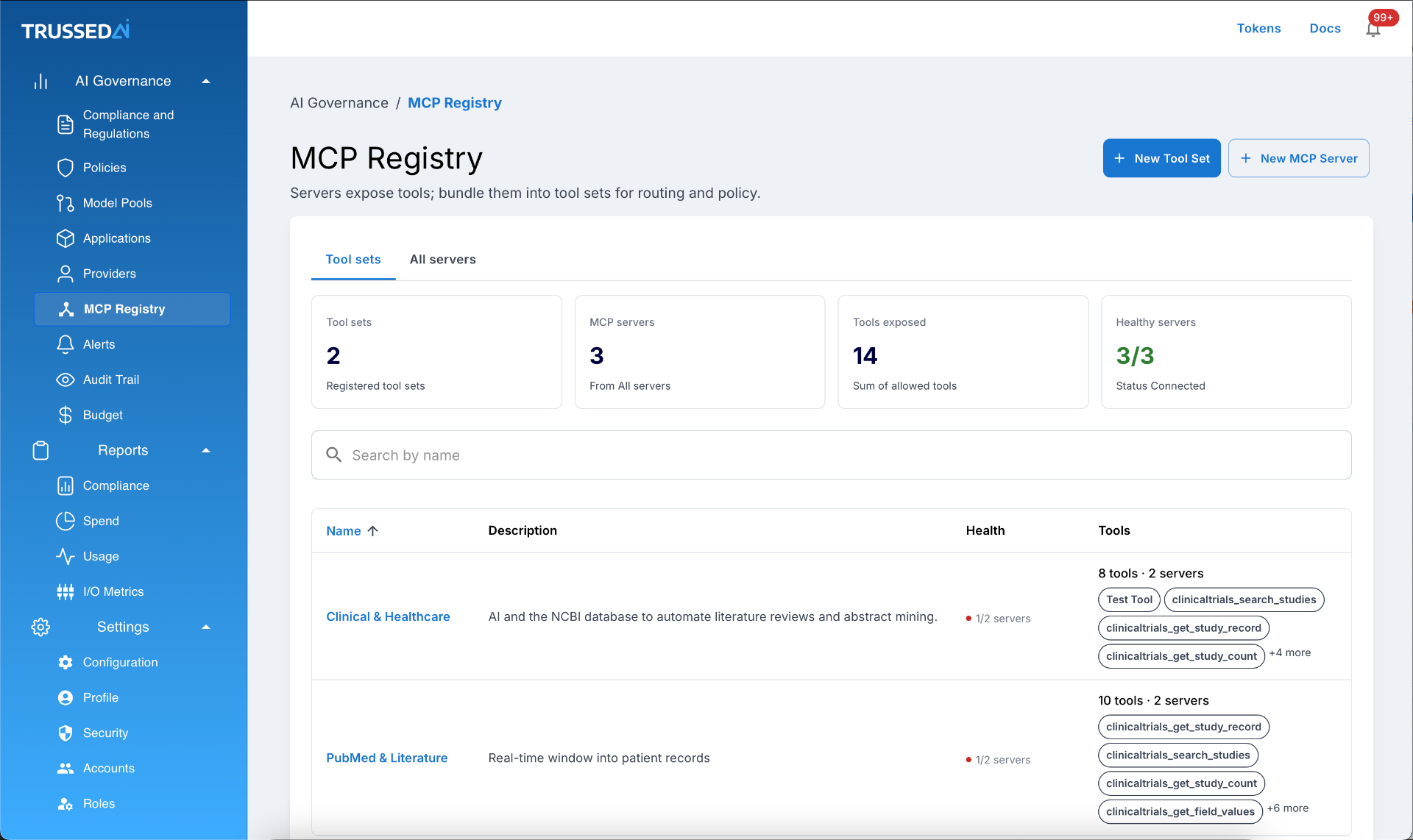
For organizations deploying enterprise AI agents, runtime governance capabilities that directly support this evidence requirement include: runtime policy enforcement, agent permissioning, least privilege controls, tool approval workflows, and audit logging. These capability areas map to the categories of evidence enforcement authorities expect, without altering the underlying legal obligations, which remain the organization's responsibility to satisfy.
Trussed AI provides runtime governance and security controls for enterprise AI agents. These controls are designed to address the technical governance gaps that create enforcement exposure, including the inability to demonstrate human oversight, trace agent actions, or produce complete audit records on demand.
Frequently Asked Questions
Does the EU AI Act apply to organizations based outside the EU?
Yes. The Act applies to providers placing AI systems on the EU market, providers and deployers located in third countries when the output of the system is used in the EU, and importers and distributors of AI systems. Jurisdiction is determined by where the system's effects are felt, not where the provider is incorporated.
If a system was placed on the market before the relevant deadline, does it still need to comply?
The Act includes transitional provisions for systems already in service before the applicable deadline. However, these provisions are not blanket exemptions. They typically require that the system is not substantially modified and that providers still register the system in the EU database. Governance teams should assess each system's transitional status individually rather than assuming a general exemption applies.
What is the difference between a provider and a deployer under the Act, and does it affect enforcement exposure?
Providers develop or place AI systems on the market and bear primary obligations, including conformity assessment and technical documentation. Deployers use high-risk AI systems under their own authority and have separate obligations, including implementing human oversight measures, monitoring system performance, and logging where applicable. Both can be subject to enforcement action for failure to meet their respective obligations.
Can an organization cure a violation after a missed deadline to avoid fines?
Corrective action ordered by a national authority typically includes a remediation period. Demonstrating timely and good-faith corrective action is a factor authorities may consider when determining the final fine amount within the applicable ceiling. However, cure is not guaranteed to eliminate financial liability, particularly where the system has been operating in a non-compliant state for an extended period or where the violation involves a prohibited practice rather than a documentation or process failure.
How does the dual enforcement structure affect GPAI model integrators?
An organization that integrates a third-party GPAI model into its own AI system may face obligations at both the national level (as a deployer of a high-risk AI system) and indirectly through the model provider's compliance status at the EU level. If the underlying GPAI model is found non-compliant by the Commission, the integrating organization's ability to lawfully deploy systems built on that model may be affected. Procurement due diligence on GPAI model providers, including review of their Chapter V compliance status, is therefore a risk management consideration.
Assess Your Organization's Enforcement Exposure
Understanding which deadlines apply to your AI systems is the first step. Demonstrating the runtime evidence authorities expect is the next.
Explore Runtime Governance