See how Trussed maps to your regulation in 20 minutes

    No generic demo, just the controls relevant to your program.

    Book a session
    Financial Services Compliance

    Financial Services Agentic AI Regulation: What Risk Leaders Need to Know

    Financial services regulators have not published a comprehensive rulebook specific to agentic AI. Existing model risk management frameworks continue to apply, but must be extended to cover autonomous action, tool use, and non-deterministic decisioning. Risk leaders should treat agentic systems as governed models requiring validation, ongoing monitoring, and documented audit trails.

    Compliance Guide  |  AI Governance and Compliance  |  Audience: Risk Leaders

    What Counts as Agentic AI in a Financial Services Context

    Agentic AI refers to systems that plan, select tools, and execute actions with limited human intervention, rather than producing a single output for a person to review. In banking and financial services, this can include agents that query core systems, initiate account actions, draft compliance filings, or coordinate with other automated systems to complete a task end to end.

    This distinction matters for risk leaders because most existing AI governance programs were built around models that produce a recommendation, score, or classification for a human to act on. Agentic systems introduce a different risk profile. The system itself executes multi-step actions, calls external tools or APIs, and can chain decisions in ways that are not always deterministic or easily reproduced after the fact. Evaluating these systems requires extending existing control frameworks rather than replacing them, since the underlying supervisory concepts of validation, monitoring, and accountability still apply.

    Why Existing Model Risk Frameworks Need Extension

    Bank AI risk management guidance developed over the past decade generally requires institutions to inventory models, document intended use, validate performance before deployment, and monitor for drift over time. These principles remain relevant to agentic AI, but they assume a model produces a discrete, inspectable output at a defined point in time. Autonomous agents complicate that assumption in several ways.

    An agent's behavior can vary within a session based on the tools it calls and the intermediate results it receives, which makes a single validation snapshot less representative of ongoing behavior. Agentic systems also often interact directly with other systems and data sources, raising questions about third-party and vendor risk that traditional model inventories may not fully capture. Because agents can take action rather than only recommend one, the consequence of an error is not limited to a flawed recommendation: it can be an executed transaction or communication that has already occurred.

    Key Distinction

    Traditional model governance asks: "Is the output correct?" Agentic governance must also ask: "Was the action authorized, logged, and reversible?"

    For institutions evaluating model risk management programs that include agentic AI, the practical implication is that the same governance questions apply, but the evidence needed to answer them changes.

    Mapping Agentic AI to Existing Compliance Frameworks

    Because no single rule governs agentic AI specifically, institutions are extending established frameworks to cover autonomous, tool-using systems. The table below summarizes the primary dimensions of that alignment.

    Compliance Dimension Application to Agentic AI
    Model Risk Alignment Extending validation and monitoring practices to autonomous, action-taking systems across the full session lifecycle, not only at a single output point.
    Audit Trail Expectations Documenting decision provenance across tool calls, intermediate steps, and chained actions so that any executed outcome can be reconstructed and reviewed.
    Runtime Control Evidence Permission scoping, tool authorization logs, and human oversight checkpoints that demonstrate bounded agent behavior at the time of execution.
    Ongoing Regulatory Development Monitoring agency bulletins, speeches, and examination findings as agent-specific interpretation of existing frameworks continues to evolve.

    Runtime Control Evidence Relevant to Examiner Review

    Examiners reviewing agentic AI deployments will apply the same accountability expectations as for any governed model. The following categories of runtime evidence are most relevant to demonstrating that appropriate controls are in place.

    • Agent identity and permission records showing which systems and data each agent can access
    • Tool-call and action authorization logs showing what actions were attempted, approved, and executed
    • Human-in-the-loop checkpoints documented for actions above a defined risk threshold
    • Decision provenance records connecting agent outputs to the inputs, tools, and policies applied
    • Exception and override logs showing when and why default agent behavior was interrupted
    • Periodic control testing results demonstrating that permission boundaries hold under normal operation

    These controls serve two purposes. They provide the evidence base for internal governance programs, and they support regulatory examination by demonstrating that the institution has visibility into agent behavior and the ability to reconstruct what occurred.

    Where Regulatory Clarity Is Still Developing

    Agencies with oversight of model risk and third-party technology risk, including the OCC, the Federal Reserve, FINRA, and the SEC, have not published a comprehensive, agent-specific rulebook. In the absence of dedicated rules for autonomous systems, institutions have generally interpreted existing supervisory frameworks as applying to agentic AI: asking whether new technology fits within established governance, validation, and monitoring practices rather than operating outside them.

    Risk leaders should treat this as an evolving area rather than a settled one. FINRA AI guidance, Federal Reserve supervisory communications, and OCC AI oversight activity should be monitored directly, since interpretation of existing frameworks as applied to autonomous, tool-using agents is more likely to be refined through speeches, bulletins, and examination findings over time than through a single definitive rule.

    Monitoring Recommendation

    Do not wait for a dedicated agentic AI rule before building governance controls. Examination activity under existing frameworks is already underway. Institutions with documented, evidence-backed governance programs are better positioned regardless of how specific guidance develops.


    Practical Steps for Risk Teams

    The following steps represent a reasonable starting point for institutions that are deploying or evaluating agentic AI systems under existing model risk management programs.

    Inventory Before Deployment

    Add agentic AI systems to the existing model or technology risk inventory before production use. Capture intended use, tool access scope, and responsible owner.

    Define Permission Boundaries

    Document the scope of each agent's system access and approved tool calls before deployment. Treat undocumented access as a gap requiring remediation.

    Centralize Audit Logging

    Establish a logging pipeline that captures tool calls and executed actions in a format that supports after-the-fact review and regulatory inquiry response.

    Require Human Review Thresholds

    Define consequence thresholds above which human review is required before an agent's action is executed. Document these thresholds and test them periodically.

    Test Controls Continuously

    Test control boundaries on a recurring basis rather than relying on a single pre-deployment validation. Agent behavior can shift as underlying models and tool integrations change.

    Monitor Regulatory Developments

    Track OCC bulletins, Federal Reserve supervisory letters, FINRA guidance, and SEC communications as agent-specific interpretation continues to develop.

    Frequently Asked Questions

    Do existing model risk management frameworks apply to agentic AI?

    Yes. Regulators have not carved out agentic AI from existing model risk requirements. Institutions are expected to apply the same core principles of inventory, validation, monitoring, and accountability to agentic systems, extended to account for autonomous action and tool use.

    What makes agentic AI different from a traditional model for governance purposes?

    Traditional models produce a discrete output for a human to act on. Agentic systems plan and execute multi-step actions directly, calling external tools and making intermediate decisions that are not always deterministic. This means governance must cover the full session lifecycle, not only a single output point.

    Which regulators are most relevant to agentic AI in financial services?

    The OCC, the Federal Reserve, FINRA, and the SEC are the primary agencies with oversight of model risk and third-party technology risk in financial services. None has published a comprehensive agent-specific rule, but all have existing frameworks that apply to autonomous AI systems.

    What runtime evidence should institutions collect for examiners?

    Key evidence includes agent permission records, tool-call and action authorization logs, documented human-in-the-loop checkpoints, decision provenance records, exception and override logs, and periodic control testing results. Together these demonstrate that the institution has visibility into agent behavior and accountability over executed actions.

    Should institutions wait for specific agentic AI rules before building governance programs?

    No. Examination activity under existing frameworks is already underway. Institutions that build documented, evidence-backed governance programs now are better positioned regardless of how specific guidance develops. The core requirements of validation, monitoring, and audit trail documentation apply today.

    Build the Runtime Evidence Examiners Expect

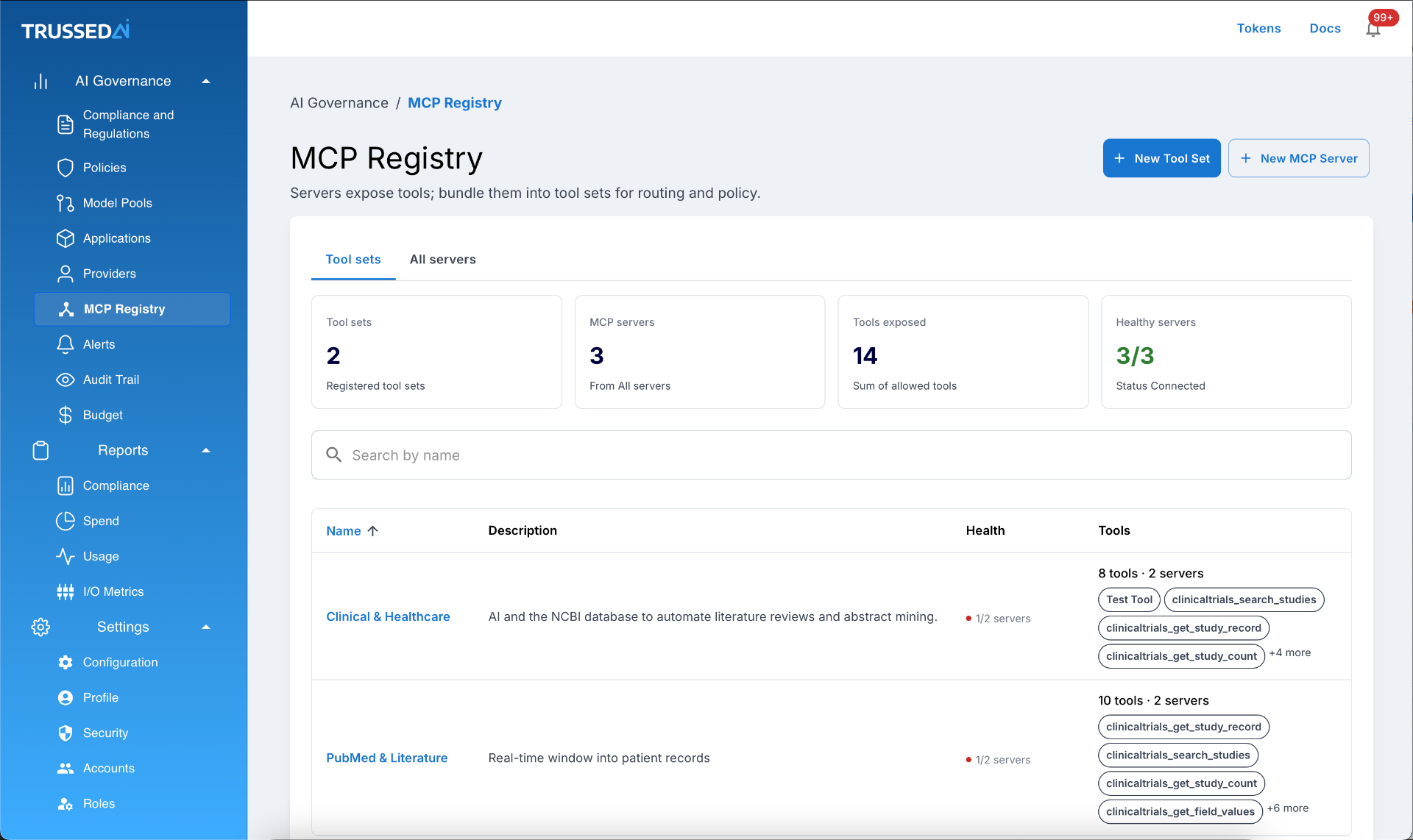
    Trussed AI provides runtime governance for AI agents, including permission enforcement, tool approval workflows, and audit logging that support model risk management programs extending into agentic deployments.

    Talk to an Expert