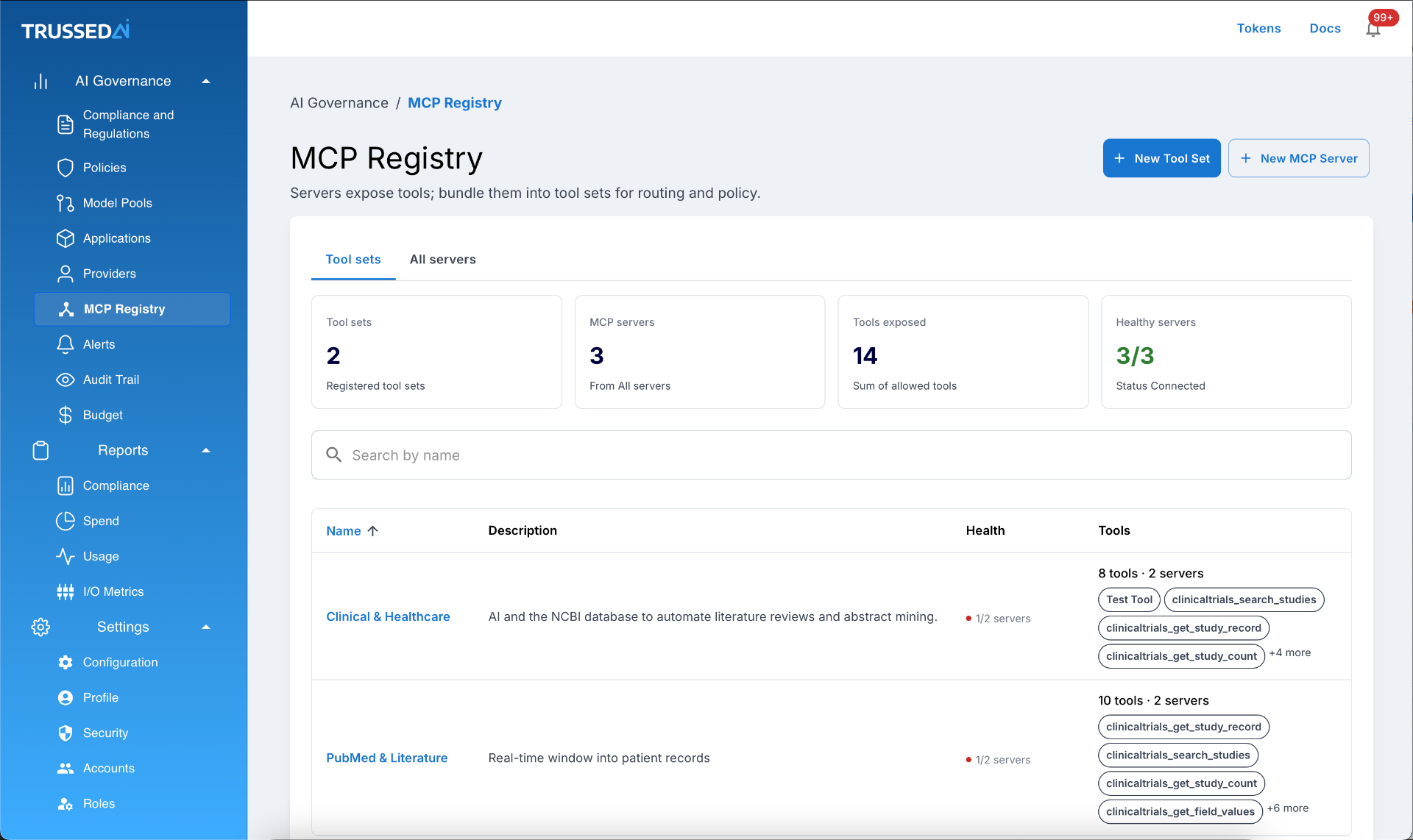
See how Trussed maps to your regulation in minutes

    No generic demo, just the controls relevant to your program.

    Book a session
    Compliance Guide

    Global AI agent governance requirements for multi-market runtimes

    Enterprises running AI agents across Brazil, China, South Korea, Japan, Singapore, Canada, the UK, Australia, and under G7 and UN-aligned expectations face fragmented but convergent demands: risk-based human oversight, security controls, transparency, and durable audit evidence. Most instruments still address AI systems generally rather than agent tool-calling specifically, so practical compliance centers on runtime policy enforcement, agent identity, least-privilege permissions, structured logging of tool invocations, and exportable oversight records that can be tuned by jurisdiction.

    Runtime architecture patterns that satisfy multi-market obligations

    A shared runtime control plane, with jurisdiction-aware policies and portable evidence, is more practical than a separate agent stack per country. The patterns below map common multi-market obligations to enforceable controls.

    1. Central policy decision point

      Evaluate each tool call and sensitive action against jurisdiction-specific and risk-tier policies before execution, without requiring code redeployment to change rules.

    2. Agent and workload identity

      Bind every action to an attestable agent identity and permission profile so audits and incident reports can show who acted and under which authority.

    3. Least-privilege tool governance

      Scope tools and external APIs with role- or attribute-based controls so agents receive only the minimum capabilities needed for the task and market.

    4. Immutable audit trails

      Record timestamped agent identity, inputs, policy decisions, tool results, outputs, and human override events in queryable form with configurable retention.

    5. Execution isolation

      Sandbox agent environments to limit blast radius when a cross-border tool path fails open or a permission boundary is mis-specified.

    6. Evidence packaging

      Export versioned policies, model or agent cards, oversight records, and risk assessments as repeatable evidence packs for internal audit or regulator inquiry.

    Evaluation criteria for multi-jurisdiction runtime readiness

    Use the following checklist when assessing whether an agent runtime can support multi-market oversight, audit, and control expectations.

    • Immutable, queryable logs of every tool call, input, output, permission decision, and human override, with configurable retention and residency
    • Runtime enforcement of least-privilege tool access and human-oversight rules that can vary by jurisdiction or data boundary
    • Attestable agent and workload identity suitable for cross-border audit and incident reporting
    • Hooks or workflows for robustness, safety, and risk evaluation consistent with Singapore-style testing and G7 lifecycle expectations
    • Exportable evidence packs: policy versions, oversight records, risk assessments, and tool inventory snapshots
    • Isolation controls and incident escalation paths that limit blast radius and support mandatory or voluntary reporting duties

    Runtime controls that travel across markets

    Four control areas form a portable baseline. Market-specific overlays (retention, labeling, assessment documentation, residency) can sit on top without redesigning the stack.

    Identity

    Attestable agent and workload identity for cross-border traceability

    Permissions

    Least-privilege tool and data access scoped by risk and jurisdiction

    Auditability

    Immutable logs of prompts, tool calls, outputs, and human overrides

    Enforcement

    Policy decision points that allow or deny actions before execution

    Why multi-jurisdiction agent runtimes create compliance gaps

    AI agents differ from static models because they authenticate, call tools, move data, and sometimes act across borders in a single session. Governance leaders therefore inherit two layers of obligation: general AI risk management expected by national and multilateral frameworks, and operational control of identity, permissions, and tool use at runtime.

    Policy language across the named markets remains mostly high-level. China is comparatively concrete on security assessment, content labeling, and log retention. South Korea’s AI Framework Act introduces risk classifications and obligations for high-impact systems, including transparency, safety measures, and potential human oversight. Japan’s 2024 business guidelines emphasize human-centric design, risk management, transparency, and continuous monitoring. Singapore’s Model AI Governance Framework and AI Verify toolkit stress data lineage, model risk assessment, human oversight, and testing for fairness and robustness. Australia’s safe and responsible AI proposals highlight testing, monitoring, and accountability for higher-risk use. The UK prioritizes sector regulators and safety testing without a single binding runtime statute. Brazil’s AI legislation and Canada’s AIDA remained in flux in the recent period, which limits firm technical mandates but does not remove accountability pressure for cross-border deployments.

    G7 Hiroshima AI Process guidance and UN advisory and Global Digital Compact themes push organizations toward lifecycle risk management, security controls, incident reporting, interoperable governance, auditability, and human rights-aligned oversight. For multi-market operators, the workable pattern is not a separate agent stack per country. It is a shared runtime control plane with jurisdiction-aware policies and portable evidence.

    Jurisdiction signals that map to runtime controls

    China’s generative AI rules require providers to conduct security assessments, implement content labeling, and retain user input and output logs for at least six months to support traceability. That expectation maps directly to structured capture of agent prompts, tool arguments, tool results, and responses, with retention and residency that can be configured per market.

    South Korea’s risk-tier thinking and Australia’s high-risk guardrails imply that tool catalogs and permission sets should be classified by impact. High-impact agents that can modify records, move funds-adjacent data, or act without immediate human review need tighter allowlists, mandatory oversight gates, and richer monitoring. Japan and Singapore both reinforce continuous monitoring and documented human oversight for higher-risk automated decisions. UK practice points security and governance teams toward demonstrating transparency, accountability, and safety testing in ways sector regulators can inspect, even when no AI-specific runtime statute applies.

    G7 expectations for risk management, transparency, robust security controls, and incident reporting translate into enterprise requirements for agent identity, least-privilege access to tools and APIs, and clear escalation paths when agents behave outside policy. UN-aligned recommendations on auditability and cross-border effects reinforce the same artifacts: who the agent was, what it was permitted to do, what it actually invoked, whether a human intervened, and how the organization detected and reported incidents.

    Where Brazil and Canada lack finalized mandatory runtime rules, enterprises still benefit from treating G7 and UN baselines as the floor. Audit logs, risk assessments, permission inventories, and oversight records remain the most portable compliance assets when statutes harden later.

    Implementation decisions for security and governance teams

    Start by inventorying agents, tool catalogs, data domains, and the jurisdictions in which actions or data may land. Map each tool path to an implied risk tier using the high-impact categories reflected in South Korean, Australian, and G7-oriented guidance. Low-risk read-only tools can remain automated under monitoring. High-impact write, exfiltration-prone, or irreversible actions should require runtime allow/deny gates and, where policy demands, human approval.

    Instrument every tool-calling path with structured logs sufficient for multi-month retention and regulatory traceability where required, including China’s six-month baseline for input and output records. Retention and residency should be configurable so one global platform can satisfy stricter markets without over-collecting everywhere. Embed automated alerting and human escalation for anomalous tool sequences, privilege spikes, or blocked high-risk actions.

    Treat policy as data: load jurisdiction packs and risk rules at the decision point so legal and security updates do not wait on release cycles. Maintain versioned policy history and monitoring records to show continuous oversight aligned with Japan and Singapore expectations. Assign explicit ownership of agent permissions and tool inventories; accountability duties across these frameworks are difficult to meet if no team can explain why an agent held a given capability on a given day.

    Governance practices that reduce fragmentation risk

    Fragmentation is structural: China is more prescriptive on logging and assessment; the UK and comparable voluntary or sector-led regimes are lighter on technical mandates; South Korea and Australia push risk-tiered obligations; Japan, Singapore, G7, and UN materials converge on monitoring, transparency, and oversight. Enterprises should not wait for agent-specific statutes to standardize controls.

    Establish a baseline control set for all production agents: authenticated identity, least-privilege tool permissions, pre-execution policy checks, structured audit logging, human escalation for high-risk actions, and incident response playbooks. Layer market-specific overlays for retention, labeling, assessment documentation, or residency. Keep technical details such as log schemas and permission models under enterprise ownership, because source instruments almost never prescribe them.

    Finally, accept the main limitation of the current landscape: most instruments regulate AI systems generally, not autonomous tool-calling agents. Direct agent mandates remain sparse, and Brazil and Canada still present uncertainty. Portable evidence and runtime enforcement remain the practical bridge between today’s high-level principles and tomorrow’s more detailed rules.

    • Treat G7 and UN principles as baseline even where local law is voluntary or unfinished
    • Classify tools and agents by impact before granting autonomous execution
    • Require policy checks on every outbound tool or cross-border action path
    • Retain oversight and log evidence in forms internal audit can reuse across markets
    • Review permission inventories on a fixed cadence as agent capabilities change
    • Document human oversight design for higher-risk automated decisions

    Assess runtime governance for multi-market agents

    Trussed AI focuses on runtime governance and security for enterprise AI agents, including policy enforcement, agent identity and permissions, tool governance, and audit logging. Use those control areas to pressure-test your cross-border compliance readiness.

    Explore Runtime Governance