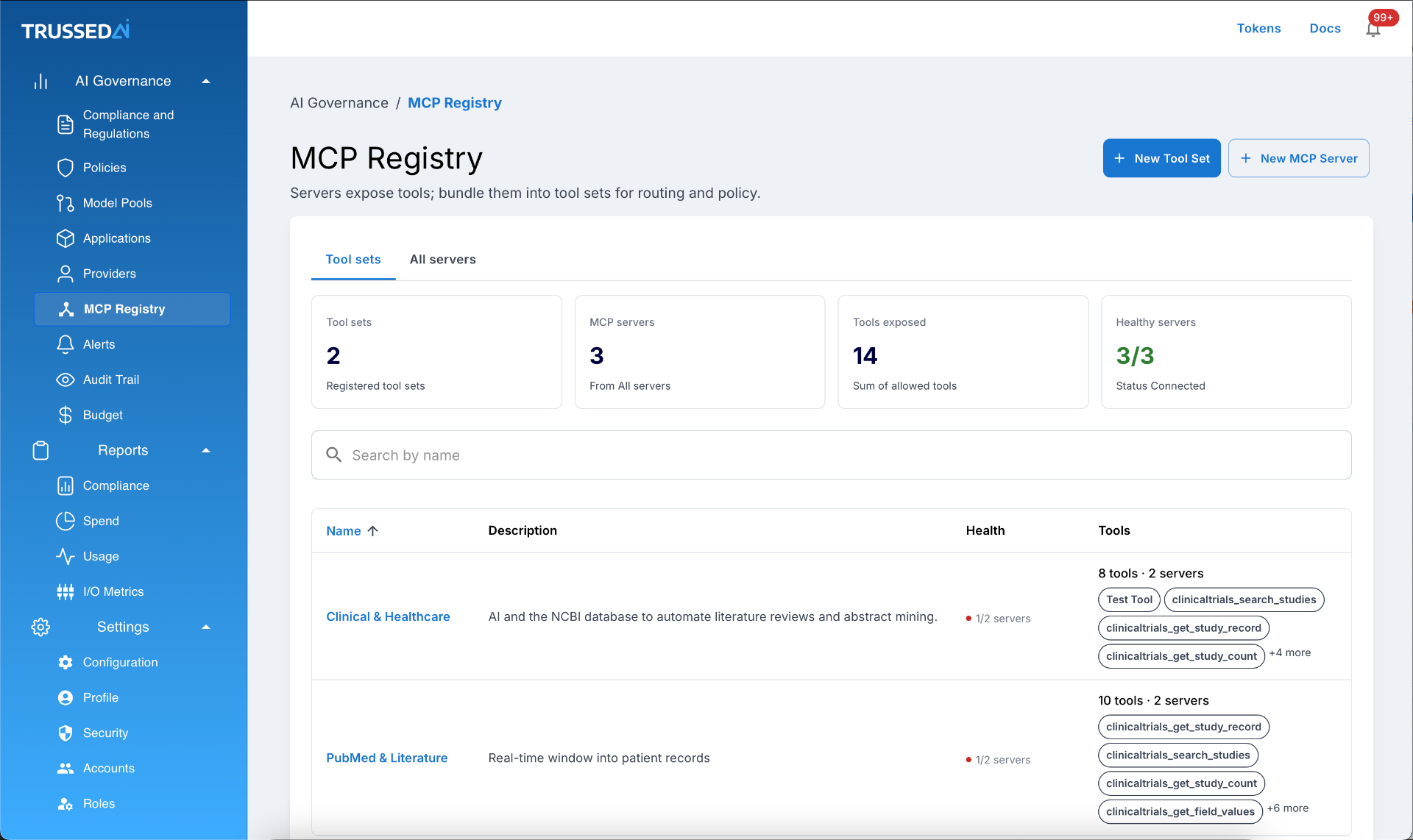
Implementing MCP Runtime Policy Enforcement for Enterprise AI Agents
Every Model Context Protocol tool invocation should be treated as an authorization event. This guide covers how enterprises can enforce policy inline before tool execution, integrating identity context, least privilege, approval workflows, and audit logging into a coherent runtime governance architecture.
Why MCP Security Must Be Enforced at Runtime
Model Context Protocol deployments change the security model for enterprise AI agents because tools are not passive context. MCP servers expose capabilities that clients can discover through tools/list and invoke through tools/call. Those tools may read data, write records, trigger workflows, reach external systems, or perform destructive actions depending on how the server is implemented. A static review of an agent prompt or an initial tool allowlist is not sufficient once the agent can choose among tools during a live session.
The practical security unit is the individual tool call. The model may propose a call, but the enterprise should not treat model output as authorization. Prompt injection and excessive agency risks make it necessary to validate the structured call independently. That means inspecting the tool name, input arguments, authenticated identities, target resource, current session, and business risk before the MCP server executes the requested action.
Reference Architecture for Runtime Policy Enforcement
A runtime enforcement architecture should place a policy enforcement point on the execution path between the agent or MCP client and the MCP server. The enforcement point should be close enough to the MCP transport or proxy layer to prevent an unauthorized tools/call request from reaching the server. A centralized policy decision point can then apply consistent rules across agents, MCP clients, servers, connectors, and environments.
The policy decision should combine enterprise identity and workload context. A request from a customer support agent acting for an authenticated employee is different from a background agent operating under a service identity. The decision should also consider OAuth audience and resource context, session risk, tenant and environment, and whether the target resource is production, regulated, sensitive, or externally reachable.
Tool metadata is useful, but it should not be the only source of truth. MCP tool definitions include a name, description, and input schema. Tool annotations can indicate whether a tool is read-only, destructive, idempotent, or open-world. Enterprises should use those signals to inform classification, then maintain their own governed tool registry with owner, purpose, permitted roles, data classes, approved environments, and risk tier.
Runtime control points for MCP tool calls
| Control Point | What to Enforce |
|---|---|
| Identity context | Bind each decision to the end user, agent workload identity, OAuth client, tenant, session, and target resource. |
| Tool-call authorization | Evaluate tool name, action type, argument values, data classification, environment, and risk tier before execution. |
| Least privilege | Limit agents to the tools, resources, and actions required for the current task only. |
| Approval workflows | Require human approval or dual control for destructive, production-impacting, or high-sensitivity actions. |
| Auditability | Record requests, policy decisions, approvals, downstream actions, and outcomes for investigation and review. |
Implementation Sequence for Least-Privilege Tool Governance
Start with inventory before writing policy. Security teams need to know which MCP servers exist, which tools they expose, what systems those tools touch, and what data or actions each tool can reach. The goal is not to prevent agents from using tools; it is to make tool use explicit, constrained, observable, and reversible where possible.
A practical rollout usually begins with monitoring and classification, then moves to inline enforcement for higher-risk tools.
-
Inventory MCP servers and tools Catalog all servers, the tools they expose, their target systems, and the data or actions each tool can reach.
-
Classify tools by risk tier Distinguish read-only, low-sensitivity tools from those that modify production resources, retrieve secrets, export customer data, delete records, or transmit externally.
-
Define policy by identity and context Author policy rules that combine user identity, agent identity, OAuth resource context, session state, tool metadata, and argument values.
-
Deploy enforcement inline Place the policy enforcement point on the execution path before
tools/callrequests reach the MCP server. -
Enable audit logging and monitoring Capture requests, decisions, approvals, and outcomes from the start. Integrate with existing SIEM and identity telemetry.
-
Validate enforcement behavior Test that unauthorized calls are blocked before execution, that argument values are inspected, and that approvals fire for the specific high-risk actions the enterprise cares about.
Runtime Checks Before Tool Execution
Runtime policy should answer five questions before any tool executes:
- Who is acting? The decision should include both the human user and the workload identity of the agent or application.
- What is being requested? Inspect the tool name, requested action, argument values, and target system.
- What data or resource is involved? Policy should distinguish public, internal, confidential, regulated, production, and customer-impacting resources.
- Is the action appropriate for the current session? A low-risk informational session should not escalate to a privileged production-change session without additional controls.
- What is the consequence if the model is wrong or the prompt has been manipulated? Treat model reasoning as untrusted context; enforce against the structured request and verified context.
Audit Logging and Telemetry Requirements
Auditability should be designed as part of the enforcement path, not added after the fact. Security and governance teams need enough information to reconstruct what the agent attempted, why the action was allowed or blocked, which policy version applied, whether a human approved it, and what happened downstream.
Logs should use consistent timestamps, severity, attributes, trace identifiers, span identifiers, and resource information so MCP events can be correlated with identity, application, and infrastructure telemetry.
Retention, access control, and integrity protections matter because tool-call logs may contain sensitive metadata, user identifiers, argument values, or references to regulated data. Enterprises should define who can access these logs, how long they are retained, how they are reviewed, and how they are preserved during investigations.
Operational Guardrails and Evaluation Criteria
Runtime policy enforcement introduces several operational design choices that should be resolved explicitly.
- Failing closed is usually appropriate for high-risk actions when the policy service is unavailable. A tightly controlled break-glass process should exist for exceptional business situations, with automatic expiry and mandatory review.
- Exceptions should expire, be logged, and be reviewed. Do not treat exceptions as permanent configuration.
- Policy authorship, tool ownership, and approval authority should be separated where possible for high-risk tools.
- Validate enforcement behavior through testing, not only policy review. Confirm that unauthorized calls are blocked, argument values are inspected, and approvals are required for the actions that matter.
- Log the complete chain from session to tool request, policy decision, approval, downstream action, and outcome.
Dedicated AI runtime governance controls, including runtime policy enforcement, runtime monitoring, agent permissions, tool approval workflows, and audit logging, fit into this architecture as the control layer for agent tool use. They should complement existing identity, SIEM, DLP, secrets management, change management, and incident response processes rather than replace them.
Frequently Asked Questions
What is MCP runtime policy enforcement?
MCP runtime policy enforcement means treating every Model Context Protocol tools/call request as an authorization event. Policy is evaluated inline before tool execution using identity context, tool metadata, argument values, resource classification, session state, and business risk. Unsafe actions are blocked or routed to a human approval workflow rather than executed automatically.
Why is a design-time tool allowlist insufficient?
A static allowlist controls which tools an agent can see but does not constrain how those tools are used at runtime. Risk depends on argument values, target resources, session context, and the combination of actions an agent takes, not only the tool name. Runtime enforcement evaluates all of these dimensions on each individual invocation.
How should tool risk tiers be determined?
Classification should reflect the actual consequence of tool execution: what data the tool can access or export, whether it modifies production systems or regulated data, whether its actions are reversible, and whether it can reach external systems. MCP tool annotations such as readOnlyHint and destructiveHint are useful signals, but enterprises should maintain their own governed registry that captures owner, permitted roles, data classes, approved environments, and risk tier.
What should audit logs include for MCP tool calls?
Logs should capture the requesting identity (user and agent), the tool name and full argument payload, the target resource, the policy decision and version, any approval record, timestamps, trace and span identifiers, the downstream action taken, and the outcome. This enables full reconstruction of an incident and correlation with identity and infrastructure telemetry.
How should the policy service behave if it is unavailable?
High-risk actions should fail closed when the policy service is unavailable. A tightly controlled break-glass process should exist for genuine emergencies, but it must have automatic expiry, mandatory logging, and post-incident review. Break-glass access should never become a standing configuration.
How does prompt injection affect MCP tool-call security?
Prompt injection can cause a model to request tool calls that were not intended by the legitimate user. Because model reasoning is untrusted context, the policy enforcement point must validate the structured request against verified identity, resource, and policy context independently of what the model claims. Blocking unauthorized structured calls before execution is the primary defense.
Govern MCP Tool Calls at Runtime
Trussed AI provides runtime governance and security capabilities for enterprise AI agents, including policy enforcement, monitoring, least-privilege permissions, approval workflows, and audit logging for agent tool use.
Request a DemoReady to govern your AI in production?